
Facebook Twitter Instagram LinkedIn RSS
    Facebook Twitter Instagram LinkedIn RSS
    SHOOTonline SHOOTonline SHOOTonline
    Register
    • Home
    • News
      • MySHOOT
      • Articles | Series
        • Best work
        • Chat Room
        • Director Profiles
        • Features
        • News Briefs
        • “The Road To Emmy”
        • “The Road To Oscar”
        • Top Spot
        • Top Ten Music Charts
        • Top Ten VFX Charts
      • Columns | Departments
        • Earwitness
        • Hot Locations
        • Legalease
        • People on the Move
        • POV (Perspective)
        • Rep Reports
        • Short Takes
        • Spot.com.mentary
        • Street Talk
        • Tool Box
        • Flashback
      • Screenwork
        • MySHOOT
        • Most Recent
        • Featured
        • Top Spot of the Week
        • Best Work You May Never See
        • New Directors Showcase
      • SPW Publicity News
        • SPW Release
        • SPW Videos
        • SPW Categories
        • Event Calendar
        • About SPW
      • Subscribe
    • Screenwork
      • Attend NDS2024
      • MySHOOT
      • Most Recent
      • Most Viewed
      • New Directors Showcase
      • Best work
      • Top spots
    • Trending
    • NDS2024
      • NDS Web Reel & Honorees
      • Become NDS Sponsor
      • ENTER WORK
      • ATTEND
    • PROMOTE
      • ADVERTISE
        • ALL AD OPTIONS
        • SITE BANNERS
        • NEWSLETTERS
        • MAGAZINE
        • CUSTOM E-BLASTS
      • FYC
        • ACADEMY | GUILDS
        • EMMY SEASON
        • CUSTOM E-BLASTS
      • NDS SPONSORSHIP
    • Contact
    • Subscribe
      • Digital ePubs Only
      • PDF Back Issues
      • Log In
      • Register
    SHOOTonline SHOOTonline SHOOTonline
    Home » “Jaws” Changed Movies Forever, But Hollywood Still Has Lessons To Learn From It

    “Jaws” Changed Movies Forever, But Hollywood Still Has Lessons To Learn From It

    By SHOOTWednesday, June 18, 2025No Comments546 Views
    Facebook Twitter LinkedIn Telegram Pinterest Tumblr Reddit WhatsApp Email
    • Image 0

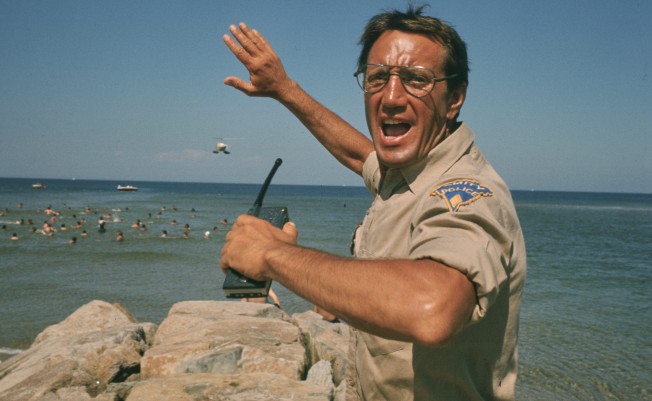
      This image released by Peacock shows Roy Scheider in a scene from "Jaws." (Peacock/Universal Pictures via AP)

    • Image 1

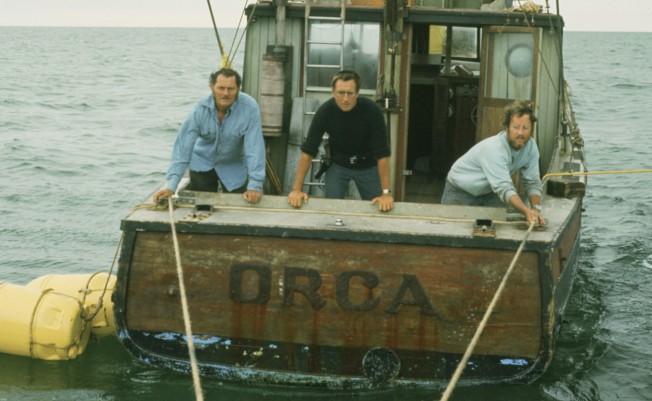
      This image released by Peacock shows, from left, Robert Shaw, Roy Scheider and Richard Dreyfuss in a scene from "Jaws." (Peacock/Universal Pictures via AP)

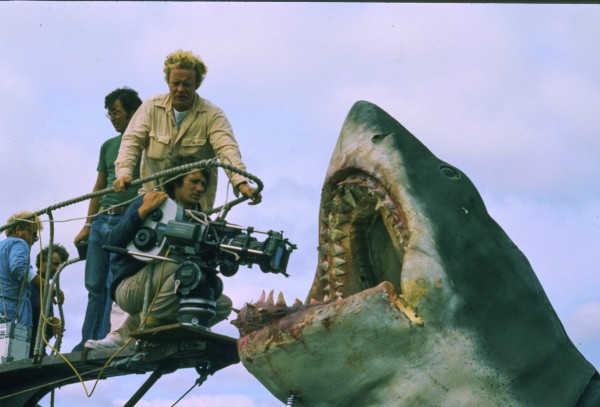
    This image released by Peacock shows cinematographer Bill Butler, standing, and director Steven Spielberg during the filming of "Jaws." (Peacock/Universal Pictures via AP)

    By Jake Coyle, Film Writer

    NEW YORK (AP) --

    Fifty years after “Jaws” sunk its teeth into us, we’re still admiring the bite mark.

    Steven Spielberg’s 1975 film, his second feature, left such a imprint on culture and Hollywood that barely any trip to the movies, let alone to the beach, has been the same since.

    Few films have been more perfectly suited to their time and place than “Jaws,” which half a century ago unspooled across the country in a then-novel wide release accompanied by Universal Pictures’ opening-weekend publicity blitz. “Jaws” wasn’t quite the first movie to try to gobble up moviegoers whole, in one mouthful (a few years earlier, “The Godfather” more or less tried it), but “Jaws” established — and still in many ways defines — the summer movie.

    That puts “Jaws” at the birth of a trend that has since consumed Hollywood: the blockbuster era. When it launched in 409 theaters on June 20, 1975, and grossed a then-record $7.9 million in its first days, “Jaws” set the template that’s been followed ever-after by every action movie, superhero flick or dinosaur film that’s tried to go big in the summer — a sleepy time in theaters before “Jaws” came around.

    And yet the “Jaws” legacy is so much more than being Hollywood’s ur-text blockbuster. It’s not possible to, 50 years later, watch Spielberg’s film and see nothing but the beginning of a box-office bonanza, or the paler fish it’s inspired. It’s just too good a movie — and too much unlike so many wannabes since –— to be merely groundbreaking. It’s a masterpiece in its own right.

    “It supercharged the language of cinema,” the filmmaker Robert Zemeckis says in the upcoming documentary “Jaws @ 50: The Definitive Inside Story,” premiering July 10 on National Geographic.

    That documentary, with Spielberg’s participation, is just a small part of the festivities that have accompanied the movie’s anniversary. Martha’s Vineyard, where “Jaws” was shot, is hosting everything from concerts to “Jaws”-themed dog dress-ups. “Jaws,” itself, is streaming on Peacock through July 14, along with a prime-time airing Friday on NBC, with an intro from Spielberg. The “Jaws” anniversary feels almost more like a national holiday — and appropriately so.

    But if “Jaws” is one of the most influential movies ever made, Hollywood hasn’t always drawn the right lessons from it. “We need a bigger boat” has perhaps been taken too literally in movies that have leaned too much on scale and spectacle, when neither of those things really had much to do with the brilliance of Spielberg’s classic.

    For the film’s 50th anniversary, we looked at some of the things today’s Hollywood could learn from “Jaws” 50 years later.

    Local Color
    Every time I rewatch “Jaws” — which I highly recommend doing on some projected screen, even a bedsheet, and preferably with an ocean nearby — I marvel at how much it gets from its Martha’s Vineyard setting.

    Where U.S.-made film productions are shot has been a hot button issue lately. Various incentives often determine movie shooting locations, with set dressings, or CGI, filling in the rest. But “Jaws” shows you just how much more than tax credits you can get from a locale.

    Spielberg was convinced the adaptation of Peter Benchley’s novel — inspired by Benchley’s childhood summers on Nantucket — shouldn’t be done in soundstages. After looking up and down the Atlantic coast, he settled on Nantucket’s neighboring island. Like his first film, the Mojave Desert-set “Duel,” Spielberg wanted his mechanized shark to swim in a real, definable place.

    “I felt the same way about ‘Jaws,'” Spielberg says in the documentary. “I wanted to go to the natural environment so there was some kind of verisimilitude. So it needed to be in the ocean, out to sea.”

    It wasn’t easy. The budget for “Jaws” nearly tripled to $9 million and the shoot extended from 55 to 159 days. Spielberg would never again be under financial pressure on a picture, but the tortured “Jaws” production put him under a microscope. An AP report from 1975 began: “It is news when a 26-year-old film director goes $2 million over budget and two and a half months over schedule and manages to avoid getting fired.”

    More than any other time in his career, Spielberg fretted.

    “‘Jaws’ was my Vietnam,” he told Richard Schickel. “It was basically naive people against nature and nature beat us every day.”

    It also infused every inch of the frame with smalltown New England flavor in the way that no soundstage, or CGI, ever could.

    Less is more
    When Spielberg was ready to start filming, his star attraction wasn’t. The mechanized shark, nicknamed “Bruce” after the director’s attorney, suffered frequent failures that forced Spielberg to find different approaches to shooting his shark scenes early in the film.

    “Jaws” instead became, to Spielberg, a kind of homage to Alfred Hitchcock’s “Psycho.” The suspense came less from the shark than the fear of the unknown and that spine-tingling question: What’s in the water? Spielberg, with the significant aid of John Williams’ instantly iconic score, delayed the appearance of his Great White until well into the film.

    “The visual ellipsis,” the critic Molly Haskell wrote, “created far greater menace and terror, as the shark is nowhere and everywhere.”

    Spielberg once estimated that Bruce’s mechanical delays added $175 million to the movie’s box office. On its initial run, “Jaws” grossed $260.7 million domestically in 1975. Adjusted for inflation, that’s about $1.5 billion. Nowadays, the shark would almost certainly be done, like most movie creatures, with computer animation. But “Jaws” showed that often the most powerful source of dread is our imagination.

    Human-scale
    This is the time of year when the fate of the world often hangs in the balance. All manner of summer movies have had no bones about destroying cities for a mere plot point. Yet for all its terror, “Jaws” features only a handful of deaths. All of its drama is human-scaled. Compared to more swaggering blockbusters today, “Jaws” would be considered a modest, mid-budget movie.

    That’s partially why you have to almost remind yourself that the movie has only three main characters in Martin Brody (Roy Scheider), Matt Hooper (Richard Dreyfuss) and Quint (Robert Shaw). Casting director Sherry Rhodes peopled the cast with locals from the island, many of whom inject the film with little moments of day-to-day humanity. “Jaws,” in that way, feels more like a community than a cast.

    Escapism with something to say
    On the one hand, “Jaws” had little to do directly with its times. The Vietnam War had just ended. Watergate had just led to the resignation of President Nixon. The heart-stopping story of a shark off the Massachusetts shoreline promised escapism.

    Yet “Jaws” has endured as a parable of capitalism, pulled out time and time again to illustrate those endlessly repeating clashes of cash versus social safety.

    “Amity is a summer town,” says Amity’s mayor, Larry Vaughn (Murray Hamilton) in the film. “We need summer dollars.”

    The shark gets the theme song and the movie poster, but the real villain of “Jaws” wears a pinstripe suit and smiles for the cameras. “As you can see, it’s a beautiful day and the beaches are open,” he says. More than the predator in the ocean, he, and the town, feast on human flesh.

    “Jaws” is untouchable
    There are boatloads of movies — including the three sequels that followed after — that have tried in vain to capture some of the magic of “Jaws.” But what happened in June 1975, let alone on Martha’s Vineyard the year before, isn’t repeatable. Even the greatest movies are products of a thousand small miracles. That title? Benchley came up with it minutes before going to print. The iconic poster came from Roger Kastel’s painting for the book. Scheider, for instance, learned about the movie by overhearing Spielberg at a party. Williams relied on just two notes for one of the most widely known film scores in movie history.

    But no ingredient mattered more on “Jaws” than the man behind the camera. Filmmaking talents like Spielberg come around maybe a couple times a century, and in “Jaws,” he emerged, spectacularly. What’s maybe most striking about “Jaws” 50 years later is how much it still doesn’t look like anything else.

    REGISTRATION REQUIRED to access this page.

    Already registered? LOGIN
    Don't have an account? REGISTER

    Registration is FREE and FAST.

    The limited access duration has come to an end. (Access was allowed until: 2025-06-20)
    Category:News
    Tags:Blockbusterbox officeJawsPeacockSteven Spielberg


    Duane “Keffe D” Davis’ Murder Trial Heads To Closing In Tupac Shakur’s 1996 Killing

    Friday, August 28, 2026

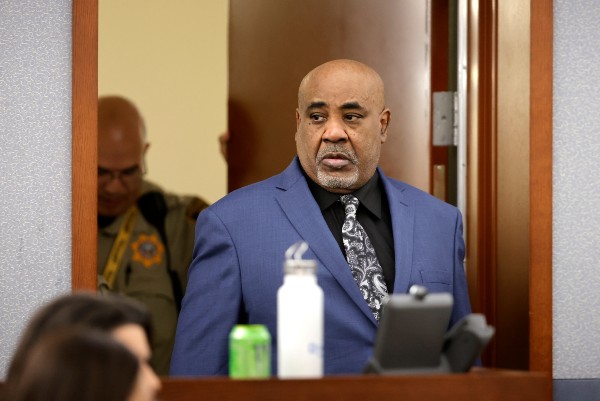
    The murder trial of Duane "Keffe D" Davis in the 1996 killing of Tupac Shakur is headed to closing arguments after the defense rested Thursday following testimony from three former Las Vegas police officers.

    Jurors are scheduled to return Monday for closing arguments before beginning deliberations in the only prosecution brought in the killing of the hip-hop icon. The presentation of evidence ended after nine days of testimony.

    Davis, 63, did not take the stand.

    Shakur was riding in a BMW on Sept. 7, 1996, when a white Cadillac pulled up next to it at a red light near the Las Vegas Strip and gunfire erupted. Shakur was shot multiple times and died six days later. The driver of the BMW, Marion "Suge" Knight, survived.

    Years later, Davis would say he procured the gun and his nephew, who has since died, fired the shots. Prosecutors say Davis orchestrated the killing, and he faces life in prison if convicted of murder with a deadly weapon with the intent to promote, further or assist a criminal gang. He has pleaded not guilty.

    Defense attorney Michael Sanft has argued that Davis fabricated or embellished his accounts of the killing for money and notoriety and that investigators failed to independently corroborate his claims.

    Retired Las Vegas homicide detective Dan Long, the defense's final witness, testified that he tried unsuccessfully to verify several details Davis provided during a 2009 police interview.

    Davis told Long that his nephew, Orlando "Baby Lane" Anderson, had gone to a Las Vegas hospital after being beaten by Shakur and others in a casino brawl hours before the rapper was fatally shot. Long said he was unable to find hospital records confirming Anderson was treated there.

    Long also tried... Read More

    No More Posts Found

    MySHOOT Profiles

    Facebook Twitter LinkedIn Telegram Pinterest Tumblr Reddit WhatsApp Email

    Previous ArticleReview: Director Joseph Kosinski’s “F1”
    Next Article Creative Data, B2B, Direct, Media, PR and Social & Creator Lion Winners Honored On Day 3 of Cannes Fest
    SHOOT

    Add A Comment
    What's Hot

    3D Animation Director Liam Archibald Joins Blinkink For Worldwide Commercial Representation

    Friday, August 28, 2026

    Duane “Keffe D” Davis’ Murder Trial Heads To Closing In Tupac Shakur’s 1996 Killing

    Friday, August 28, 2026

    C. Kim Miles Shares Insights Into The Reimagining Of “Little House on the Prairie”

    Thursday, August 27, 2026
    Shoot Screenwork

    Apple, TBWA\Media Arts Lab and Director Nicos Livesey Deploy Clay Animation To Showcase “The Mighty Mac Mini”

    Friday, August 28, 2026

    TBWA\Media Arts Lab and director Nicos Livesey–via Blinkink and Stoopid Buddy Stoodios–teamed on this clay…

    TDA Boulder, Director Michael Downing Tackle Banking Clichés In “No Nonsense” Campaign For First Interstate

    Thursday, August 27, 2026

    JT Mega, Director Jake Zalutsky “Savor The Little Things” For Mahatma Rice

    Wednesday, August 26, 2026

    9/11 Day, Pete Davidson, David&Goliath Share Personal 9/11 Story and “UNIITE For Good”

    Tuesday, August 25, 2026

    The Trusted Source For News, Information, Industry Trends, New ScreenWork, and The People Behind the Work in Film, TV, Commercial, Entertainment Production & Post Since 1960.

    Today's Date: Fri May 26 2023
    Facebook Twitter Instagram LinkedIn RSS
    More Info
    • Overview
    • Upcoming in SHOOT Magazine
    • Advertise
    • Privacy Policy
    • SHOOT Copyright Notice
    • SPW Copyright Notice
    • Spam Policy
    • Terms of Service (TOS)
    • FAQ
    STAY CURRENT

    SUBSCRIBE TO SHOOT EPUBS

    © 1990-2021 DCA Business Media LLC. All rights reserved. SHOOT and SHOOTonline are registered trademarks of DCA Business Media LLC.
    • Home
    • Trending Now

    Type above and press Enter to search. Press Esc to cancel.

    Type above and press Enter to search. Press Esc to cancel.

    SHOOT
    click X to close window
    ×

    Farewell Note from the Publisher

    After 66 years of covering Commercial, Film & TV production & post, SHOOTonline ceased publishing as of Friday, August 28th, 2026.

    Although publishing activities concluded, the company will continue to operate through a transition period to ensure a smooth conclusion to all business dealings, including processing refunds for prepaid SPW tokens and collecting outstanding advertising invoices.

    A heartfelt Thank You to our readers, advertisers, sponsors, vendors, and of course the amazing staff throughout the decades who have made this wonderful SHOOT Magazine/SHOOTonline journey possible. And, a huge Thank You to all the executives, artisans, companies, agencies, associations, guilds, studios, networks, streaming services, manufacturers, and so many more who trusted us to share their news, milestones, insights, and points of view with the industry.

    Click Here to read more about SHOOT’s closure.

    Click Here to close window
    We use cookies to ensure that we give you the best experience on our website. If you continue to use this site we will assume that you are happy with it.