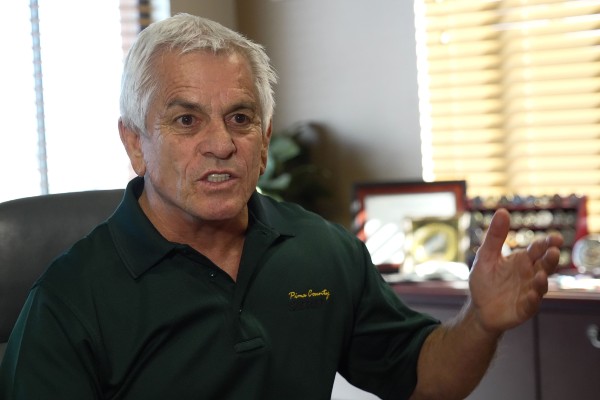

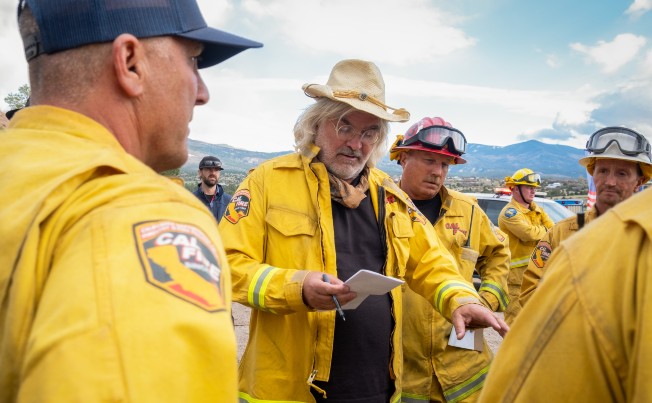
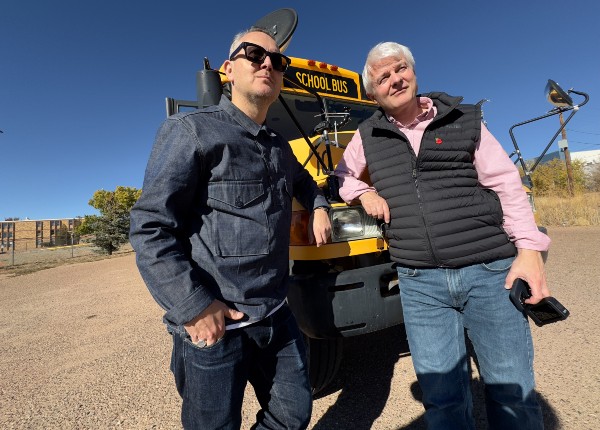
The day that Oscar nominations are announced is one marked by myriad reactions from above and below-the-line artisans expressing their thanks for the recognition. But among the feedback that poured in, perhaps the most succinctly eloquent came from a man who wasn’t nominated, a professional who served as a consultant to director Paul Greengrass’ The Lost Bus (Apple). John Messina, retired Cal Fire assistant region chief, said of the team nominated for Outstanding Achievement in Visual Effects, “They found a way to make incredibly complex fire behavior feel real while still telling a story that’s emotionally honest, human, and respectful of the events that inspired it. It was truly a privilege, and I’m honored and proud to have been a small part of this project.”
The Lost Bus takes us back to 2018 just before the outbreak and then through the raging devastation of the wildfire that engulfed Paradise, Calif., eventually claiming 85 lives. The Lost Bus centers on a single harrowing yet inspiring real-life story within what turned out to be one of the deadliest wildfires in U.S. history. We are introduced to a school bus driver who picked up 22 elementary school students and their teacher on what was day one of The Camp Fire. The commute became a lengthy nightmarish ordeal as communications broke down, roads were cut off or gridlocked with congestion, and the flames quickly spread.
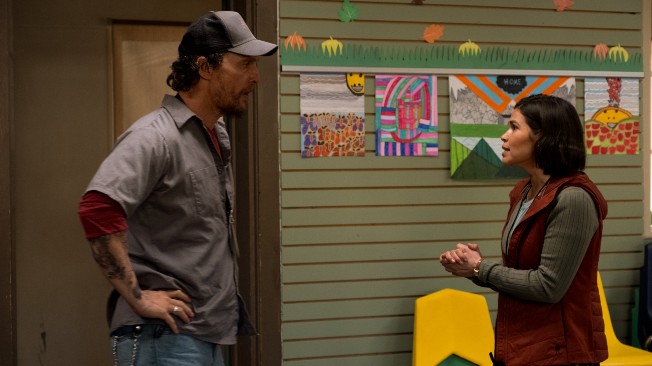
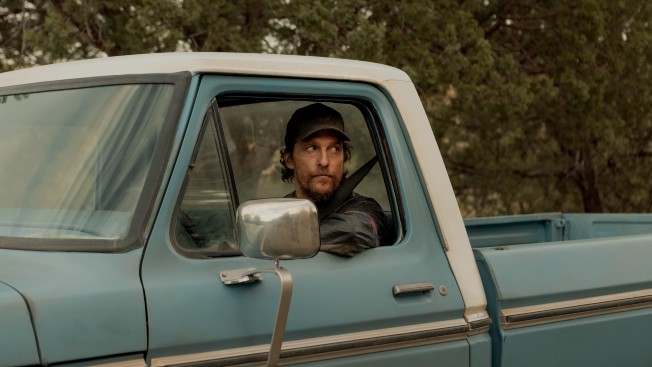
Starring Matthew McConaughey as the bus driver and America Ferrera as the school teacher, The Lost Bus dramatically depicts horrific events–shedding light on the driver and teacher’s heroics, miraculously saving their lives and those of all the students. Greengrass teamed with Brad Ingelsby on the script, adapted from Lizzie Johnson’s book titled “Paradise.”
The visual challenges inherent in the story were daunting with Greengrass bringing in a long-time colleague, visual effects supervisor Charlie Noble, to problem solve and help realize the movie he envisioned. This marked the sixth film in the collaborative relationship between Noble and Greengrass. Noble had previously served as second unit effects supervisor on Greengrass’ United 93 and The Bourne Ultimatum–and then VFX supervisor on Green Zone, Captain Phillips and Jason Bourne.
Noble jumped at the chance to again team with Greengrass, noting that the writer-director has a penchant for making deeply relevant films, often tackling social issues in the process. In The Lost Bus there’s the undercurrent of issues facing our planet–droughts, climate change and related dynamics contributing to the growing occurrence and intensity of wildfires. But, affirmed Noble, telling the human story is always the priority for Greengrass–supported by the historical facts. Some eight months were spent in prep piecing together specifics of the wildfire with the help of Nicola Barnes, the film’s researcher, and Messina, the Camp Fire incident commander. The actual route of the bus was mapped out in conjunction with the path of the fire, showing its progression and how conditions deteriorated along the way.
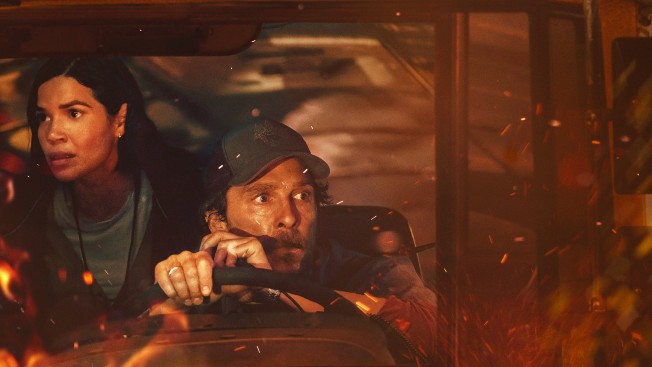
Initially a volume stage and extensive visual effects were to be the means used to attain the fiery hell. But as Greengrass delved more deeply into the story, he felt it could be better told if shot practically as much as possible. Chronicling the fire, lensing through smoke and ash were more in line with the fluidity of Greengrass’ signature documentary style. So he, DP Pal Ulvik Rokseth, and Noble set out to carefully and selectively deploy real fire. Backlot photography took place in Santa Fe, New Mexico, with special effects contributing practical fire. There they had enough space to accommodate vehicular traffic; propane gas lines were laid to burn controllable jets of fire. Tungsten lights were deployed the augment the flames, helping the yellowish light emitted from gas burners more closely resemble the warm familiar light that a wildfire would create.
While there were real flames to build off on in relation to the bus–giving the actors something physical to respond to–Noble’s effects team painted over the fire with burning CG vegetation that could then emit thick smoke and embers which were seemingly everywhere, driven by wind gusts of some 50 miles per hour. Ultimately in real life the wind-swept flames and embers leapfrogged repeatedly, destroying nearly 19,000 structures and 150,000-plus acres of land. Noble and his team deployed CG trees, shrubs and grass, blowing around leaves, pine needles and adding dust as well as swaying power lines and the whipping about of flags, accentuating the sheer force of the winds–with flames created in CG as well.
Practically and through more sophisticated visual effects, the smoke and ash yielded an enveloping darkness, turning day into night. Noble described this as “one of the sobering things” about a wildfire this massive. He noted that an occasional patch of daylight peeking through the dark served as a reminder that the sun was still out–though for the most part, it didn’t seem so. Noble cited the narrative value of a brief scene inside the bus when it’s at a complete stop about two-thirds of the way through the film. One of the kids, related Noble, asks if it’s nighttime. The bus driver, Kevin McKay, responds, “No,” explaining that the smoke has blotted out the sun.
Also faithfully re-created were actual environs in Paradise, including Roe Road, Feather River Canyon and Pulga Bridge. The latter in reality burned down but Noble and his team tapped into environmental survey data to build a realistic previs model replete with the various types of trees around that location, then meshed with live-action imagery shot on the backlot. Testament to the quality of the work is reflected in the four Visual Effects Society (VES) Award nominations recently earned by The Lost Bus, not only for Outstanding Visual Effects in a Photoreal Feature but also Outstanding Environment in a Photoreal Feature–one for The Wildfires of Roe Road, another for Feature River Canyon by the Pulga Bridge–and Outstanding Effects Simulation in a Photoreal Feature for the Escape from Hell sequence (technical achievement in creating the wildfire, smoke, and traffic jam effects),
As for the biggest takeaway from his experience on The Lost Bus, Noble shared that it was a reaffirmation of his desire to want to work with people he likes, respects and trusts. “The team we assembled” was just that, he said, citing the likes of Greengrass, VFX producer Gavin Round and assorted others throughout the shooting and into postproduction. Nominated along with Noble for the Visual Effects Oscar are ILM VFX supervisor David Zaretti, beloFX VFX supervisor Russell Bowen, and special effects coordinator Brandon K. McLaughlin.
The Lost Bus marks the second career visual effects Oscar nomination for Noble; the first came in 2022 for his work as VFX supervisor on No Time to Die.
Additionally The Lost Bus has earned a BAFTA Film Award nomination for Best Achievement in Special Visual Effects. It’s the third career VFX BAFTA nod for Noble. He was nominated in 2008 for The Bourne Ultimatum and in 2022 for No Time to Die.
Back when he was at DNEG–a VFX house he co-founded–Noble served as VFX supervisor for the studio on such films as Ridley Scott’s biblical epic Exodus: Gods and Kings, and on Steven Spielberg’s Cold war thriller Bridge of Spies. The latter earned a nomination for Best Supporting Visual Effects at the VES Awards in 2016.
This is the 13th installment of SHOOT’s 16-part The Road To Oscar Series of feature stories. Shining a light on such disciplines as directing, cinematography, producing, editing, music, production design, visual effects and animation, this series will appear weekly all the way through to the Academy Awards gala ceremony. The 98th Oscars will be held on Sunday, March 15, 2026, at the Dolby Theatre at Ovation Hollywood in Hollywood, Calif., televised live on ABC and streamed on Hulu.