

Continuing its run on the festival circuit, If These Walls Could Rock–directed by Tyler Measom and Craig A. Williams, who also served as producers on the film–provides an intimate, heartfelt look at the Sunset Marquis, a legend to those in the know. A small hotel just off the famed Sunset Strip, the Marquis opened its doors in 1963 and evolved into a secret rock ‘n’ roll haven, the go-to place for performers who had gigs–from concerts to publicity junkets–in Los Angeles. Hotel guests ranged from The Beatles to The Rolling Stones, The Ramones, Blondie, The Clash, U2, Guns N’ Roses, Kings of Leon and Brandi Carlile, among assorted other artists.
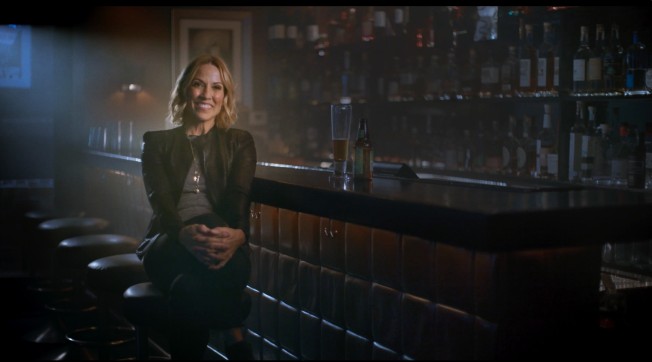
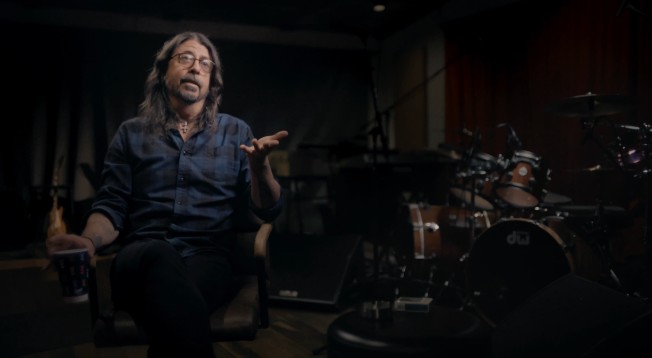
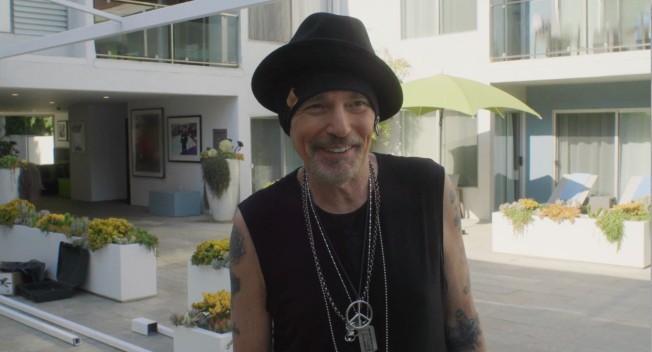
While specifics about the documentary’s distribution–from theatrical to streaming and other options–were just rounding into shape at press time, suffice it to say that prospects for high-profile exposure are good given the marketability of the multi-layered story, and the drawing power of an all-star rock ‘n’ roll cast. Actor Billy Bob Thornton, the self-described “unofficial mayor” of the Sunset Marquis, is an anchor of sorts for the film, reminiscing about and reflecting on what the hotel, his primary residence for a number of years, has meant to him. The film also taps into rock luminaries such as Bruce Springsteen, Dave Grohl, Morrissey, Ringo Starr, Slash, Sheryl Crow, Roger Daltrey, Michael DesBarres, Joe Elliot, Gloria Estefan, Sheila E., Billy Gibbons, Cindy Lauper, Richard Marx, Morrissey, John Oates, Sharon Osbourne, Chris Robinson, Nile Rodgers, Darius Rucker and Gene Simmons.
SHOOT connected with Measom and Williams who provided some backstory on the documentary, reflecting on the approach they adopted and the nature of their collaborative relationship. Williams noted that checking into the Sunset Marquis was something to which he had aspired for quite a while–literally and figuratively speaking. On the former score, Williams’ longing dated back to his teen years as a wannabe rock star in the 1980s. And his band got a taste of the Sunset Strip neighborhood magic, with performances at such storied venues as the Whisky a Go Go, The Roxy Theatre and the Troubadour. But Williams never got around to staying at the Marquis during his time as a rocker.
It wasn’t until 2013 when Williams, who became a writer, got the chance to experience and delve deeply into the Sunset Marquis. He was hired to pen a book about the hotel, marking its then 50th anniversary. He became attuned to the mythic rock hangout, confirming the expected (wild parties, varied episodes of debauchery), but more importantly uncovering the unexpected–the sense of community that developed among the artists staying there. It was a place–for some, even a home–where they could be themselves, for better or worse. And that freedom fueled their creativity.
Also unexpected was the father-son dynamic which became an underpinning of the story. Sunset Marquis founder George Rosenthal, a Depression-era Jewish kid who had a hand in building Hugh Hefner’s Playboy Club, had a vision for a hotel with a residence feel that would be embraced by entertainers and musicians. He named the hotel after his young son Mark, whose boyhood nickname was Markey. Ironically while the hotel was named after Mark, George didn’t have much time to be a father to him. Instead George was the patriarch of the trendy hotel he created, and spent much time in the fast lane lifestyle that went with it.
But as the old saying goes, “Necessity is the mother of invention.” And the strained relationship between father and son had to be repaired when the Sunset Marquis fell on hard times in the 1980s. Mark, an attorney, returned to rescue not only the hotel but also the relationship with his dad.
While he and Mark Rosenthal authored the well-received book, “If These Walls Could Rock: 50 Years at the Legendary Sunset Marquis Hotel,” Williams always thought the subject matter could make for a great film. He’s no stranger to film as he has written Kung Fu Panda, Hotel Transylvania and Underdog as well as the biopics Pandemonium (about WWE founder Vince McMahon) and The Book of Luke (about 2 Live Crew’s Luther Campbell). However the goal of bringing “If These Walls Could Rock” to the small and/or big screen didn’t seem realistic until Williams connected with Measom, a director whose filmography includes the Netflix series Murder Among the Mormons, the documentaries I Want My MTV, Takin’ Care of Business, An Honest Liar and Sons of Perdition. Measom was directing the Paramount+ series I Wanna Rock when he crossed paths with Williams who was serving as a consulting producer on the project. The two developed a rapport and Williams pitched him the idea of a documentary about the Sunset Marquis. Measom, who wasn’t familiar with the hotel, took a crash course on its history and became enamored with the prospect. But it wasn’t just his rock ‘n’ roll documentary lineage that drew him in. The clincher, he recalled, was the emotional story of the relationship between a father and son which ran the gamut from alienation to finally reconciliation and redemption.
Beyond music, Measom has a filmography that’s shown an affinity and empathy for the complex relationship between a parent and child. Sons of Perdition, for instance, focused on three teen boys escaping the Fundamentalist Church of Jesus Christ of Latter Day Saints (FLDS). The lads were pretty much left to fend for themselves as the film explores themes of familial abandonment and broken relationships.
On a personal front, Measom shared that he had a strict Mormon upbringing and spent years trying to please his father who never accepted the fact that his son, upon coming of age, was not an ardent Mormon. The father-and-son dynamic thus holds a special place in Measom’s heart as he’s evolved, reflecting on the father figure he had and needed as a child, and “the father I am now.” Doing justice to the story of George and Mark Rosenthal within the context of the Sunset Marquis became a goal and fascination for documentarian Measom.
Williams added that he was “pretty surprised” as to how forthcoming Mark Rosenthal was about the relationship with his father. “With someone as open and thoughtful as he was, you protect that in a way. You want to present it to the audience in a really genuine way,” affirmed Williams.
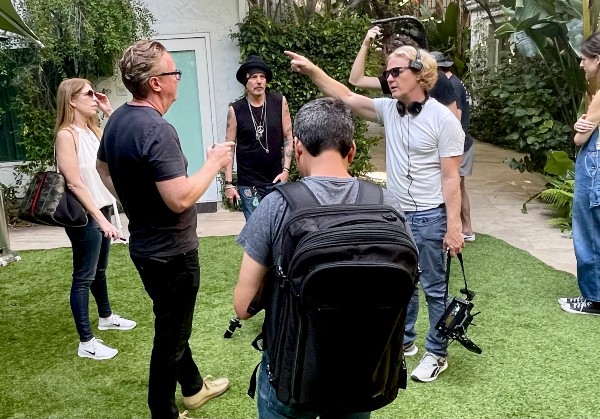
It was also important to do right by the Marquis. Measom and Williams wanted their film to feel like the hotel–colorful, alive, musical, creative, rebellious, full of mischief and fun with an undercurrent of the perennial trifecta of sex, drugs and rock ‘n’ roll. A concerted effort was made to conduct most of the interviews inside the Marquis, trying whenever possible to capture the flavor of the place and the rockers who inhabited it. Inspiration at times came from the subjects being interviewed, Singer-songwriter Morrissey, for example, wanted to be interviewed in his bed, wearing pajamas, recalled Williams who along with Measom immediately embraced the idea in that it advanced their desire to make each conversation in the film feel natural and unguarded, leading potentially to the sharing of stories and observations that might not have emerged otherwise.
Co-directing; cinematic approach
If These Walls Could Rock marks Williams’ feature directorial debut, a circumstance which also made Measom an ideal partner. Not only is Measom accomplished as a director but he has extensive experience working in tandem with other directors to bring projects to fruition. For example, he teamed with Jared Hess to direct Murder Among the Mormons, Jennilyn Merten to direct Sons of Perdition, and Patrick Waldrop to direct I Want My MTV.
“I love collaborating with other filmmakers. It’s nice to bounce ideas off of a creative partner,” said Measom.
Williams took on the learning curve of a first-time director, discovering “the power of collaboration, the number of people who come together” and the varied decisions that have to be made from pre-pro through to post in order to realize the creative vision for a film. Williams appreciated Measom’s generosity in sharing insights, and the cinematic sensibilities he brings to documentary filmmaking.
On that score, Measom related, “If I see a documentary and they place somebody against a white screen, if feels lazy to me.” Measom tries to infuse the documentary discipline with the cinematic feel and scope of a scripted film, Interviews for If These Walls Could Rock, he affirmed, needed to be “creative, wild and bold.”
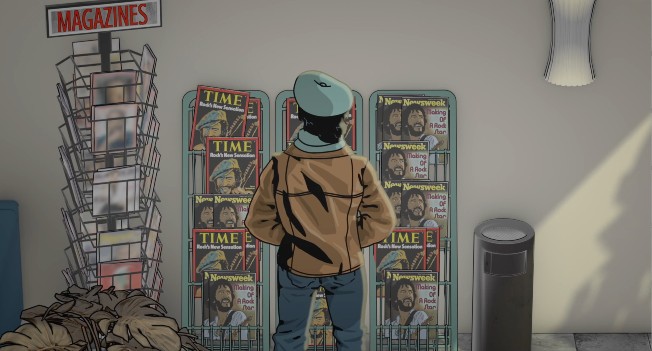
And to further heighten the cinematic appeal, he and Measom enlisted the expertise of animation creative supervisor Arthur Jones who brought select animators in the fold. Jones turned out animation featuring Rod Stewart and Duran Duran, and oversaw animated sequences by Katharine Ball (the Hollywood Hills, Keith Richards by the Marquis pool), Ben Clarkson (Bruce Springsteen, and Slash meeting Richards), Mickey Miles (Ozzy Osbourne at the pool, artists at the Marquis), Katelyn Costello (various buildings and maps), Sunshine Mall (Michael DesBarres in the pool, the Black Crowes), Christina Fidler (Kelly Osbourne and Green Day) and Tobeytown Animation (Slash, as well as George and Mark Rosenthal). Animation, noted Measom, added to the documentary feeling like a fun ride with plenty of heart.
“I wanted a unique style throughout and animation helped that along. Rather than one animator, we used eight, That twisted the film a bit more, gave it a little more life. It became part of the creativity and contributed to the fun of the story,” said Measom.
Music, appropriately enough, was also key. Composer Johanna Cranitch created an original score providing emotional beats while meshing with needle-drop tracks of era-defining songs from performers who stayed at the Marquis.
The film has had a lasting impact on Measom. He cited the interview with Grohl in which he talks about “how important it is for creative individuals to meet in person.” That’s what made the community that gathered at the Marquis so special. “As of late,” observed Measom, “we’ve gotten further and further away from that creatively with emails, meetings over Zoom–even when it comes to the making of music. There is nothing like collaborating with a person, creatives sitting around a table or at a bar, coming up with ideas. Nothing can replace that. We tried to do that as much as we could [on If These Walls Could Rock]. Going forward, I’ve taken this to heart. Let’s try to meet in person, try to do this pitch in the office. That used to be the norm and now is out of the ordinary.”
While coming together in person may have become out of the ordinary, it’s remains a desired path that can lead to something extraordinary. And that human connection with the creative freedom it brings, observed Measom, helped a band of misfits–or more accurately, numerous solo artists and bands of misfits–feel as though they fit in at the Marquis.
Publisher’s Note:
Having lived near the Sunset Marquis in West Hollywood in the late ‘70s, I moved to NYC in 1980 and stayed at the hotel during my business trips to Los Angeles over the next several decades. At some point, I approached the hotel with an advertising proposal: trading ads in SHOOT Magazine for hotel nights. They said yes. Sometimes my room was small, and other times it was a villa, but the stay was always fun. When I learned about If These Walls Could Rock, I reached out to co-director Tyler Measom to ask him and Craig A. Williams if they would like to be interviewed by SHOOT. The resulting interview is above. I live in Vero Beach, FL these days and coincidentally If These Walls Could Rock will screen on Sunday, April 12, during the Vero Beach Film Festival. I’m looking forward to conducting an on-stage interview with co-director Williams during the festival.
Roberta Griefer, Publisher & Editorial Director