
Jerskin Fendrix already has two Oscar nominations to show for his relatively recent entry into movie music. Both of the composer’s Best Original Score nods are for features directed by Yorgos Lanthimos–Poor Things in 2024 and Bugonia (Focus Features) this year. Poor Things marked Fendrix’s theatrical motion picture debut and also garnered him a BAFTA Film Award nom in ‘24–so did Bugonia two years later.
Sandwiched in between Poor Things and Bugonia was Lanthimos’ Kinds of Kindness. The three pictures collectively represent Fendrix’s full feature filmography thus far. They are wildly different from one another–though they share some common ground, including that they all starred Emma Stone who won the best leading actress Oscar for Poor Things and again finds herself currently nominated in the same category for Bugonia.
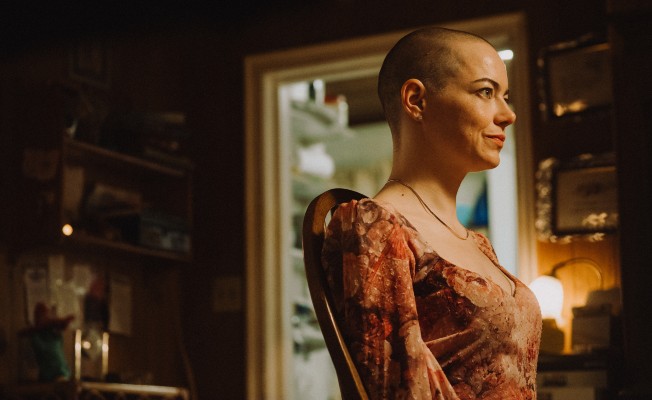
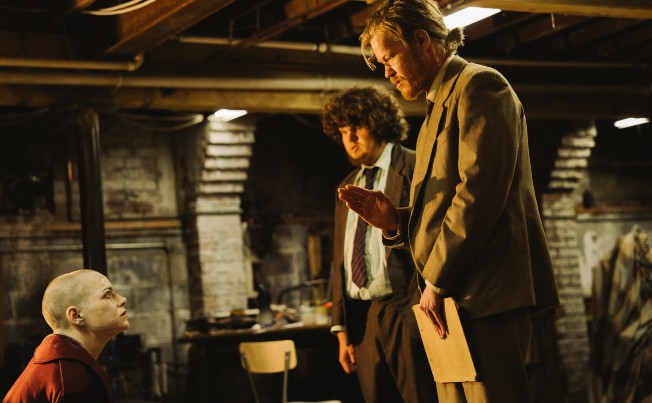
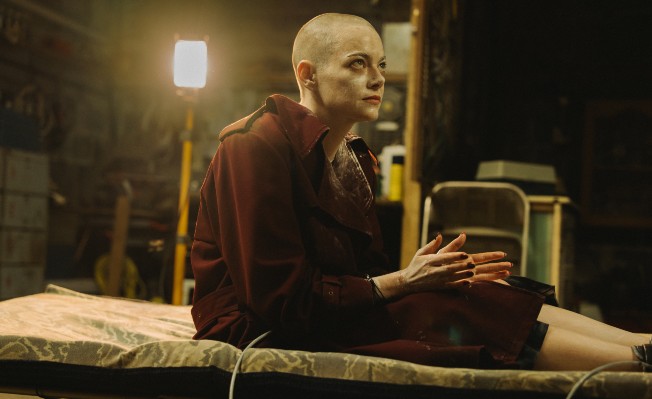
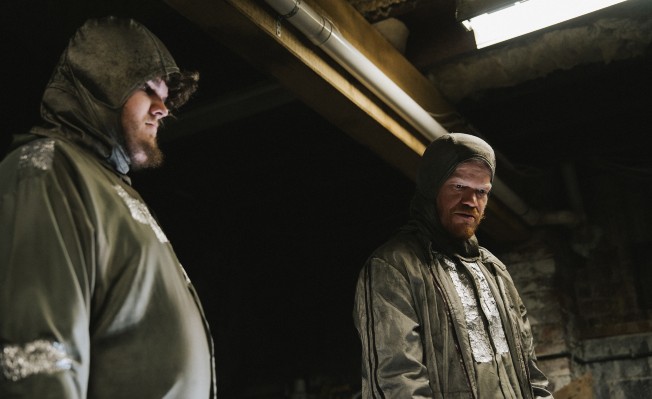
In addition to Stone and Fendrix, Bugonia is up for the Best Picture and Best Adapted Screenplay (writer Will Tracy) Oscars. The creatively ambitious film follows two conspiracy-obsessed young men–Teddy (portrayed by Jesse Plemons) and his neurodivergent cousin Donny (Aidan Delbis)–as they burst out of their online rabbit holes and kidnap Michelle (Stone), a high-powered pharmaceutical company CEO they believe to be an alien who has come to conquer Earth and destroy humanity. Michelle is taken to the house where Teddy and Donny live, her head is then shaved and she is chained in the basement. There she tries to talk to her captors–alternately reaching out to them and being defiant–in an attempt to gain freedom. The dialogue between Michelle and Teddy is often ideological but there’s no meeting of minds between them–Michelle is steeped in corporate-speak while Teddy seems to be in the throes of paranoia, and capable of violence. Strangely, though, Teddy doesn’t seem like your garden variety whack job–in fact he even displays some semblance of kindness and decency at times to Michelle and particularly to Donny and a colony of bees in his backyard. Bees, after all, are critical to our ecosystem and the extraterrestrial alien invasion planned by Michelle poses an existential threat to them, according to Teddy.
Tracy’s script spans dark humor and absurdity on one end and brutal poignancy–coupled with the psychological tension of a surreal sci-fi thriller–on the other. Bugonia under Lanthimos’ direction contains laughter, tears, disbelief and horror all in one. The offbeat narrative has us questioning who is sane and who isn’t while chronicling a divide among people that in modern-day reality is wide and isolating. Also wide is the narrative range of Bugonia which takes us from the great outer space to the microcosm of a bee colony.
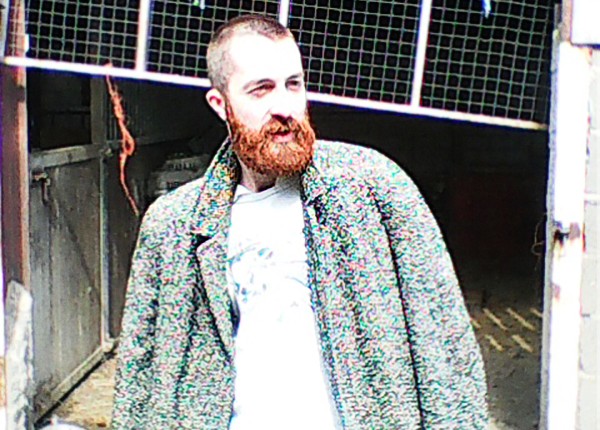
In this Q&A, SHOOT connected with Fendrix who discussed how he originally came together with Lanthimos, the nature of their working relationship, and the buzz of being a two-time Academy Award nominee.
SHOOT: Please provide some backstory. How did you and Yorgos Lanthimos initially come together, resulting in your first original feature score on Poor Things? And how has your collaborative relationship evolved since then over two more films–Kinds of Kindness and Bugonia?
Fendrix: By a stroke of insane fortune Yorgos listened to my debut album “Winterreise” and asked me to try some music for Poor Things. I basically locked my jaw like a badger and spent two years making sure I didn’t fuck up that chance.
At this point I think Yorgos knows roughly what I can do and I know roughly what Yorgos wants, and there’s a nice Venn diagram overlap between the two. The near total musical freedom I’m permitted, as well as being allowed to do something completely different for every film is pretty great, there’s no risk of getting bored. Yorgos is a truly great encourager. I have achieved things in my work with him that I did not previously consider myself capable of.
SHOOT: What was your process–how did the two of you work together on Bugonia?
Fendrix: Yorgos gives great trust and leeway to his collaborators. He is insistent on only seeing the sausage, rather than how the sausage is made. A lot of artists get lured into conceptual justification for banal work, and in his way Yorgos denies that sort of bullshit. I finish my work and I show it to Yorgos and he says yes or no.
SHOOT: What was (were) the biggest challenge(s) that Bugonia posed to you as a composer?
Fendrix: I must admit I don’t think I satisfactorily overcame the biggest challenge, which is writing for orchestra without buckling under the weight of a few centuries worth of canon. I wish I had been braver with my use of orchestra. Next time.
SHOOT: How has feature film work informed you as a composer? After your first solo studio album Winterreise, you embarked on Poor Things. What did your experience on Poor Things enable you to bring to your second studio album, Once Upon a Time In Shropshire. Conversely, how have your albums informed your feature film work?
Fendrix: The film work and the solo work are very healthily symbiotic. The film work gives me a grander perspective and forces me to be a more empathetic artist. The solo work allows me exploration, and I get to embarrass myself with zero consequences to a greater good. I’ve been thinking a lot about Albert Brooks recently, how he gets an infinite sandbox in his solo efforts, and then gets to use the appropriate weapons from that playtime when acting in other people’s work.
SHOOT: To get an Oscar nomination for your first film is pretty heady stuff. What does your second nomination now for Bugonia mean to you personally and professionally?
Fendrix: God damn it’s weird as all hell. I am thankful to have enough friends who want to celebrate on my behalf, but also to work with people so much more accomplished than me that I don’t get ahead of myself. So I remain balanced on the tightrope between total ego delusion and total self deprecation. I do wobble.
SHOOT: What is your biggest takeaway (or if you prefer, lessons learned) from your experience on Bugonia? What are among the things you walk away with first and foremost from the experience? What has made/left a lasting impression?
Fendrix: I think any of the compositional trepidations from Bugonia did truly come from a place of fear, as to whether I could actually wield an orchestra properly. I imagine some level of insecurity from my academic musical education. Anyway I think I gained a lot of confidence from doing whatever I did successfully and I’d like to use an orchestra again so I can really pop the hood and make that baby purr.