

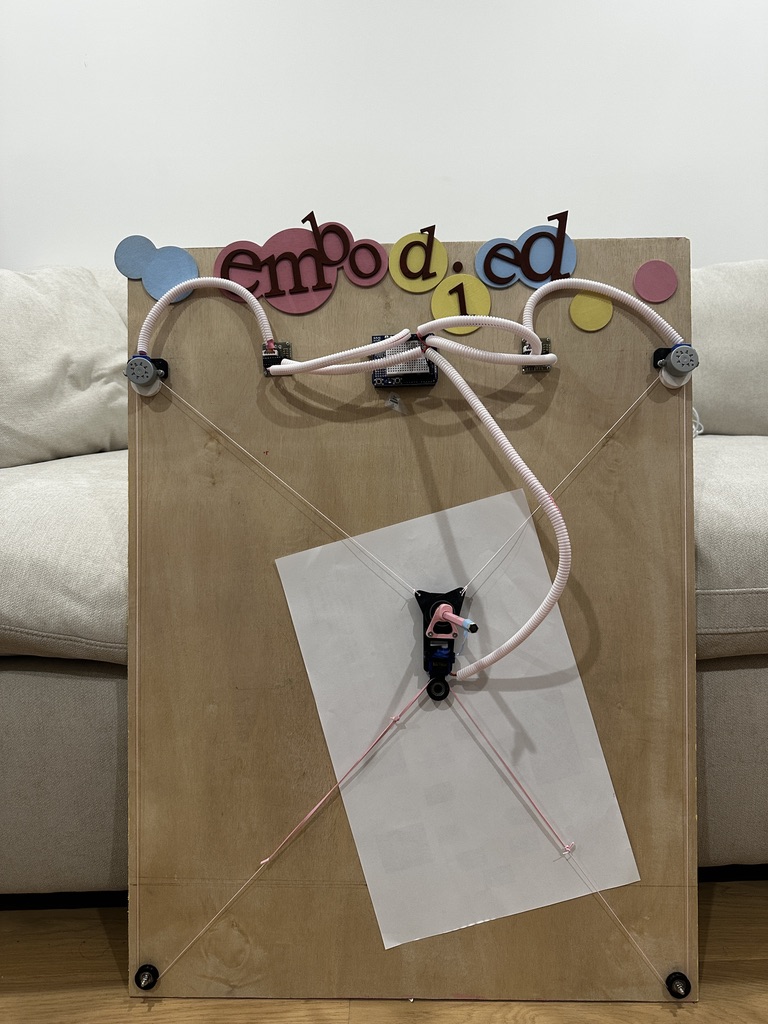
We sat down with designer, art director, and creative technologist Charmaine Regina as she outlined her creative approach for us. She walks us through how she’s shifted the focus away from technicalities and instead uses design as a way to build relationships between people and brands. Her design skills go beyond traditional boundaries as she works across branding, motion, and code, treating brand identity as something dynamic. She discusses how her approach is grounded in experimentation, and outlines her deep sense of responsibility for how design influences perception, agency, and experience in an increasingly interactive world.
When a project involves branding, motion, and code, where does your process begin, and why?
I start with the interaction, not the motion.
I’m less interested in animation as spectacle and more interested in motion as a consequence of behavior. I ask: What triggers movement? What does the user do? What does the system respond to? Where does friction, resistance, or flow live?
For me, motion isn’t decoration — it’s feedback. It’s how a system speaks back.
So the process begins by designing the relationship between a person and a system. Once that relationship is defined, motion emerges naturally as its expression.
That’s how branding becomes something you don’t just look at — it’s something you participate in.
What role does experimentation play in your production pipeline, and how do you know when an experiment is ready to become a system?
Experimentation is not a phase. It is the practice.
I prototype constantly:
- p5 sketches
- motion tests
- generative mark-making
- UI fragments
- embodied interactions
An experiment becomes a system when:
- it can produce infinite variations without losing identity
- it responds coherently to new inputs
- it has rules, not just aesthetics
The moment I can write the logic of it — not just show the output — it’s ready.
That’s when it becomes infrastructure.
What tools or workflows have fundamentally changed the way you design in the past few years?
Three shifts changed everything:
- Creative coding as a design medium
p5.js, Basil.js, MediaPipe — these turned design into a living process instead of static output. - Generative systems thinking
Designing rules instead of artifacts.
Designing behaviors instead of layouts. - Real-time interaction
Webcam, motion tracking, environmental data — suddenly identity could listen.
This moved my practice from composition to orchestration.
Systems design often requires giving up control. How comfortable are you with unpredictability in your work?
Unpredictability is the point. I design conditions rather than outcomes. I create worlds and let them perform. The only control I care about is in the constraints, the logic, and the emotional range. Everything else should surprise me. If it doesn’t, the system is no longer alive.
In your view, where does responsibility sit when technology shapes perception and behavior?
Responsibility sits with the designer.
Responsibility sits with the designer. We are no longer just shaping interfaces — we are shaping attention, desire, belief, and behavior. Design has become behavioral architecture. If a system manipulates, exploits, or numbs, that responsibility belongs to its creators. My work aims to restore agency, slow people down, bring them back into their bodies, and build awareness rather than addiction.
As identities become dynamic and generative, what does “brand voice” mean to you now?
Brand voice is no longer just tone — it’s behavior. It lives in how a system responds, adapts, listens, and moves. It shows up in the timing of feedback, the rhythm of motion, and the way interaction feels. Voice isn’t what a brand says anymore — it’s what it does. It’s a personality encoded into logic, expressed through rules rather than slogans. It responds to people, and it invites participation.
How do you maintain authorship when systems, collaborators, and algorithms all contribute to the final output?
I maintain authorship by designing the rules, constraints, and values embedded in the system. I’m not attached to individual outputs; I’m attached to the worldview behind them. The system carries my fingerprint even when I’m no longer touching it. That’s authorship at scale.
What aspects of the design industry feel outdated to you right now?
Much of the design industry still feels rooted in outdated models — treating branding as static assets, chasing trend cycles, and overproducing surface aesthetics. There’s also a tendency to treat AI as a replacement rather than a collaborator. I think the obsession with designing for “less friction” is outdated. Not everything should be seamless. Sometimes friction creates awareness, intention, and authenticity. The future is about live participation — design that people don’t just consume, but shape. Instead of finished artifacts, we create systems that perform, environments where users become co-authors and identity is formed through interaction in real time.
What questions are you personally still trying to answer through your work?
I’m constantly exploring where the line is drawn between form and function, and how an idea evolves from influence into authorship. I think a lot about how to balance commercial clarity with creative integrity — how to design work that sells without losing depth. I’m also interested in how branding can move beyond surface aesthetics to become a system of meaning, behavior, and experience.
What practices outside of design, dance, writing, research feed most directly into your work?
My work is informed primarily by reading, watching films I love, and being present. Observation is my main practice — noticing how people move, how spaces feel, how moments unfold. Lately, my favorite reads are books by Bruno Munari. His thinking around play, process, and visual logic continues to shape how I approach systems, interaction, and form.