
Facebook Twitter Instagram LinkedIn RSS
    Facebook Twitter Instagram LinkedIn RSS
    SHOOTonline SHOOTonline SHOOTonline
    Register
    • Home
    • News
      • MySHOOT
      • Articles | Series
        • Best work
        • Chat Room
        • Director Profiles
        • Features
        • News Briefs
        • “The Road To Emmy”
        • “The Road To Oscar”
        • Top Spot
        • Top Ten Music Charts
        • Top Ten VFX Charts
      • Columns | Departments
        • Earwitness
        • Hot Locations
        • Legalease
        • People on the Move
        • POV (Perspective)
        • Rep Reports
        • Short Takes
        • Spot.com.mentary
        • Street Talk
        • Tool Box
        • Flashback
      • Screenwork
        • MySHOOT
        • Most Recent
        • Featured
        • Top Spot of the Week
        • Best Work You May Never See
        • New Directors Showcase
      • SPW Publicity News
        • SPW Release
        • SPW Videos
        • SPW Categories
        • Event Calendar
        • About SPW
      • Subscribe
    • Screenwork
      • Attend NDS2024
      • MySHOOT
      • Most Recent
      • Most Viewed
      • New Directors Showcase
      • Best work
      • Top spots
    • Trending
    • NDS2024
      • NDS Web Reel & Honorees
      • Become NDS Sponsor
      • ENTER WORK
      • ATTEND
    • PROMOTE
      • ADVERTISE
        • ALL AD OPTIONS
        • SITE BANNERS
        • NEWSLETTERS
        • MAGAZINE
        • CUSTOM E-BLASTS
      • FYC
        • ACADEMY | GUILDS
        • EMMY SEASON
        • CUSTOM E-BLASTS
      • NDS SPONSORSHIP
    • Contact
    • Subscribe
      • Digital ePubs Only
      • PDF Back Issues
      • Log In
      • Register
    SHOOTonline SHOOTonline SHOOTonline
    Home » Filmmaker Charles Burnett Discusses The Never-Ending Battle and Legacy Surrounding “Killer of Sheep”

    Filmmaker Charles Burnett Discusses The Never-Ending Battle and Legacy Surrounding “Killer of Sheep”

    By SHOOTWednesday, April 23, 2025No Comments672 Views
    Facebook Twitter LinkedIn Telegram Pinterest Tumblr Reddit WhatsApp Email
    • Image

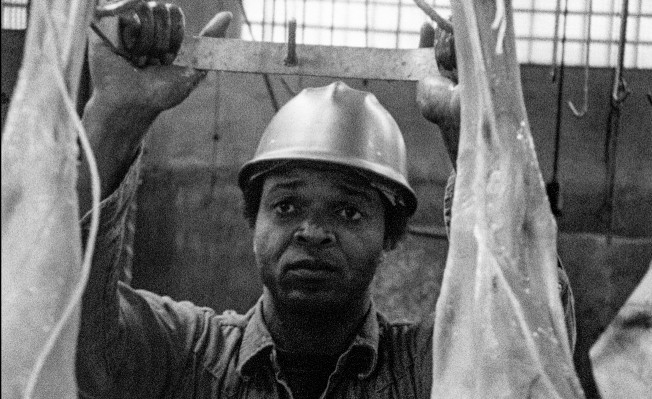
      This image released by Kino Lorber shows Henry G. Sanders in a scene from "Killer of Sheep." (Kino Lorber via AP)

    Filmmaker Charles Burnett poses for a portrait on Saturday, April 19, 2025, in New York. (Photo by Matt Licari/Invision/AP)

    By Jake Coyle, Film Writer

    NEW YORK (AP) --

    Charles Burnett has been living with “Killer of Sheep” for more than half a century.

    Burnett, 81, shot “Killer of Sheep” on black-and-white 16mm in the early 1970s for less than $10,000. Originally Burnett’s thesis film at UCLA, it was completed in 1978. In the coming years, “Killer of Sheep” would be hailed as a masterpiece of Black independent cinema and one of the finest film debuts, ever. Though it didn’t receive a widespread theatrical release until 2007, the blues of “Killer of Sheep” have sounded across generations of American movies.

    And time has only deepened the gentle soulfulness of Burnett’s film, a portrait of the slaughterhouse worker Stan (Henry G. Sanders) and his young family in Los Angeles’ Watts neighborhood. “Killer of Sheep” was then, and remains, a rare chronicle of working-class Black life, radiant in lyrical poetry — a couple slow dancing to Dinah Washington’s “This Bitter Earth,” boys leaping between rooftops — and hard-worn with daily struggle.

    A new 4K restoration — complete with the film’s full original score — is now playing in theaters, an occasion that recently brought Burnett from his home in Los Angeles to New York, where he met The Associated Press shortly after arriving.

    Burnett’s career has been marked by revival and rediscovery (he received an honorary Oscar in 2017), but this latest renaissance has been an especially vibrant one. In February, Kino Lorber released Burnett’s “The Annihilation of Fish,” a 1999 film starring James Earl Jones and Lynn Redgrave that had never been commercially distributed. It was widely hailed as a quirky lost gem about a pair of lost souls.

    On Friday, Lincoln Center launches “L.A. Rebellion: Then and Now,” a film series about the movement of 1970s UCLA filmmakers, including Burnett, Julie Dash and Billy Woodberry, who remade Black cinema.

    The Mississippi-born, Watts-raised Burnett is soft-spoken but has much to say — only some of which has filtered into his seven features (among them 1990’s “To Sleep With Anger”) and numerous short films (some of the best are “When It Rains” and “The Horse”). The New Yorker’s Richard Brody once called the unmade films of Burnett and his L.A. Rebellion contemporaries “modern cinema’s holy spectres.”

    But on a recent spring day, Burnett’s mind was more on Stan of “Killer of Sheep.” Burnett sees his protagonist’s pain and endurance less as a thing of the past than as a frustratingly eternal plight. If “Killer of Sheep” was made to capture the humanity of a Black family and give his community a dignity that had been denied them, Burnett sees the same need today. The conversation has been edited for brevity and clarity.

    Q: The most abiding quality in your films seems to me to be tenderness. Where did you get that?

    BURNETT: I grew up in a neighborhood (Watts) where everyone was from the South. There was a lot of tradition. It was a different culture, a different group of people living there — people who had experienced a great deal and kept their humanity. And they had a work ethic. It was a nice atmosphere. People looked after you. I grew up with people who were very gentle. There were the Watts riots when you couldn’t walk down the street without police harassing you. Police would stop me and do this forensic search and call you all kind of names while doing it. But in the riots, it wasn’t that people got braver. They just got tired. When people got together, they always had the perspective of: Let the kids eat first.

    Q: In “Killer of Sheep,” like your short “The Horse,” you seem to be giving a great deal of thought to the future of these children, and their preparation for the cruelty of the world.

    BURNETT: In “Killer of Sheep,” kids were learning how to be men or women. The changing point was when Emmett Till and his picture was being shown everywhere in Jet magazine. All of a sudden, it was no longer this fantasy. You were now aware of the cruelty of the world. I remember a kid who had come home abused, who supposedly fell down the stairs. You learned this dual reality to life.

    Q: When you watch “Killer of Sheep” again, what do you see?

    BURNETT: Life going by. A life that should have been totally different. In high school, I had a teacher who would go walking down the aisle pointing at students saying, “You’re not going to be anything, you’re not going to be anything.” He got to me and said, “You’re not going to be anything.” Now, (Florida Gov. Ron) DeSantis wants to destroy Black history. It’s always a battle.

    Q: What could have been different?

    BURNETT: Young kids were capable of so much more. We were all looking for a place where you felt like you belonged. America could have been so much greater. The whole world could have been better.

    Q: In thinking about what could have been different after “Killer of Sheep,” would you include yourself in that? You’re acknowledged as one of the most groundbreaking American filmmakers yet the movie industry often wasn’t welcoming.

    BURNETT: You do the best you can with what you have. There are so many things you want to say. What you find is that sometimes you work with people that don’t see eye to eye. Even though I didn’t do more, it’s still more than what some people made, by far. I’m very happy about that. On the flip side, a lot of times you hear, “Your films changed my life.” And if you can get that, then you’re doing good. One of the things that I found is that people will take advantage of you and make you make the film that they want to make. You need to be somehow independent where you can tell them, “No, I’m not doing this.” I had to do that a number of times. So you don’t work that often.

    Q: To you, what’s the legacy of “Killer of Sheep”?

    BURNETT: One of the reasons I did “Killer of Sheep” the way I did, with kids in the community working in all areas of the production, was to show them that they could do it. I made the film to restore our history, so young people could grow from it and know: I can do this. Even when I was in film school, there was a film production going on in my neighborhood. I was on my bike and I rolled over to see. I asked a guy, “What set is this?” and he acted like I wouldn’t understand. It’s changed a bit but there’s still this attitude. You look at what Trump and these guys are doing with DEI. It’s this constant battle. It can never end. You have to constantly prove yourself. It’s a battle, ongoing, ongoing, ongoing.
    REGISTRATION REQUIRED to access this page.

    Already registered? LOGIN
    Don't have an account? REGISTER

    Registration is FREE and FAST.

    The limited access duration has come to an end. (Access was allowed until: 2025-04-25)
    Category:Chat Room Interviews
    Tags:Charles BurnettChat RoomKiller of Sheep


    Review: Writer-Director BenDavid Grabinski’s “Mike & Nick & Nick & Alice”

    Wednesday, March 25, 2026
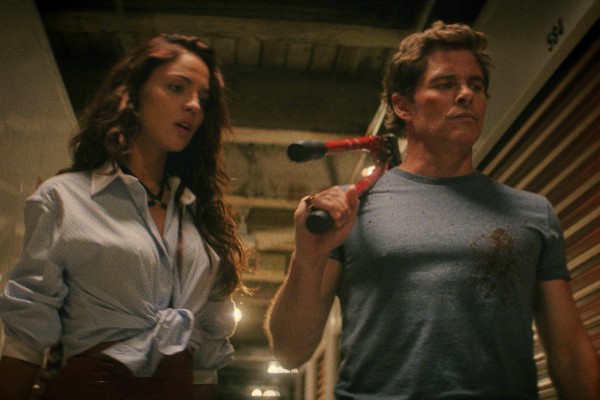
    This image released by 20th Century Studios shows Eiza González and James Marsden, right, in a scene from "Mike & Nick & Nick & Alice." (20th Century Studios via AP)

    "Mike & Nick & Nick & Alice" might look like a somewhat generic, glossy action-comedy on the surface. It's got two (well, kind of three, but we'll get to that later) men north of 50 ( Vince Vaughn and James Marsden ), one woman south of 40 (Eiza González) and the promise of some violence (you know, the fun kind). That's not necessarily a bad thing — sometimes you get a "This Means War" or a "Mr. & Mrs. Smith." But in the streaming era, more often than not you get, I don't know, "Red One"?"Fountain of Youth"? Something else we've already all forgotten? This might also be a streaming-era production, debuting on Hulu and Disney+ on Friday, but it's clear from the very first moments that "Mike & Nick & Nick & Alice" isn't just a generic facsimile of a "fun" movie designed for more for the algorithm than anyone's amusement. No, this is a movie that begins, for no particular reason other than probably the delight of the filmmakers, with Ben Schwartz singing "Why Should I Worry?" a song that was written and sung by Billy Joel for the 1988 animated Disney movie "Oliver & Company," a modern, New York City-set take on Charles Dickens starring dogs. Is it related to anything? No. Is it a fun song to set the tone that also made this elder millennial critic smile? Yes. There are choices like this throughout the film, mostly through precise, lighthearted banter that sounds real. There's even a spirited debate about the best and worst boyfriends on "Gilmore Girls" — Rory's, not Lorelai's, which falls a little flat in execution. I'm not sure the actors' hearts are really invested in Logan and Jess the way, say, Liam Neeson was able to act genuinely distraught over his "Buffy the Vampire Slayer" episodes being deleted off his DVR in "The... Read More

    No More Posts Found

    MySHOOT Profiles

    Facebook Twitter LinkedIn Telegram Pinterest Tumblr Reddit WhatsApp Email

    Previous ArticleHarvey Weinstein’s #MeToo Retrial Opens With Added Allegations From A Former Model
    Next Article Review: Director Isaiah Saxon’s “The Legend of Ochi”
    SHOOT

    Add A Comment
    What's Hot

    Parents See Hope In Back-To-Back Verdicts That Social Media Providers Failed To Protect Young Users

    Thursday, March 26, 2026

    Review: Writer-Director BenDavid Grabinski’s “Mike & Nick & Nick & Alice”

    Wednesday, March 25, 2026

    Jury Finds Instagram and YouTube Liable In Landmark Social Media Addiction Trial

    Wednesday, March 25, 2026
    Shoot Screenwork

    HBO Releases Teaser Trailer For “Harry Potter and The Philosopher’s Stone”; Series To Debut Christmas 2026

    Thursday, March 26, 2026

    HBO has released the official teaser for the eight-episode first season of the upcoming original…

    The Best Work You May Never See: Clash Royale Is Everything It’s Cracked Up To Be In Campaign From DAVID New York

    Wednesday, March 25, 2026

    Digital Kitchen Designs A Psychological Main Title Sequence For Season 2 Of Prime Video’s “Cross”

    Tuesday, March 24, 2026

    “Love The Way You Look” At The Bowling Alley Thanks To Men’s Wearhouse, Party Land and RSA Directing Duo Peter Martin

    Monday, March 23, 2026

    The Trusted Source For News, Information, Industry Trends, New ScreenWork, and The People Behind the Work in Film, TV, Commercial, Entertainment Production & Post Since 1960.

    Today's Date: Fri May 26 2023
    Facebook Twitter Instagram LinkedIn RSS
    More Info
    • Overview
    • Upcoming in SHOOT Magazine
    • Advertise
    • Privacy Policy
    • SHOOT Copyright Notice
    • SPW Copyright Notice
    • Spam Policy
    • Terms of Service (TOS)
    • FAQ
    STAY CURRENT

    SUBSCRIBE TO SHOOT EPUBS

    © 1990-2021 DCA Business Media LLC. All rights reserved. SHOOT and SHOOTonline are registered trademarks of DCA Business Media LLC.
    • Home
    • Trending Now

    Type above and press Enter to search. Press Esc to cancel.

    Type above and press Enter to search. Press Esc to cancel.

    We use cookies to ensure that we give you the best experience on our website. If you continue to use this site we will assume that you are happy with it.