
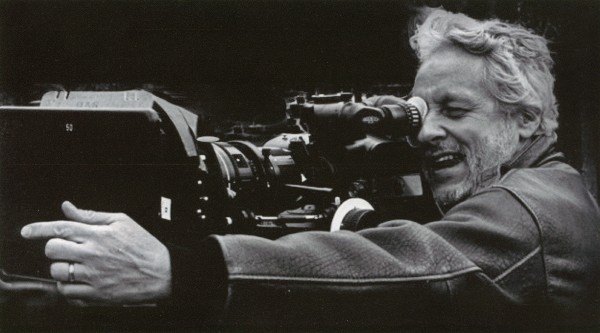
Joe Sedelmaier, the groundbreaking commercial director whose stellar work reshaped modern advertising and popular culture, died peacefully of natural causes on Friday (5/8) at the age of 92. According to his family, he passed away at home in his favorite chair.
Fittingly, many people’s memories of Sedelmaier happened when they were seated on the couch or a favorite chair as his iconic TV commercials came into homes across America, entertaining and making us laugh. His best known work includes FedEx’s “Fast Talking Man” and Wendy’s “Where’s the Beef?” The latter, which featured senior citizen Clara Peller’s spirited “Where’s the Beef” proclamation–making her a star, is ranked among the most successful and culturally influential advertising campaigns in television history.
Originally an aspiring cartoonist, Sedelmaier began his career as an art director before moving into directing, Over a career spanning decades, he became one of the most influential and recognizable creative voices in American advertising. His unconventional casting choices and cinematic instincts revolutionized the ad industry in the 1970s and ‘80s. His work aired and was recognized globally. He earned countless honors and garnered multiple Clio Awards, Cannes Gold Lions, as well as numerous awards from The One Show, the Art Directors Club of New York, Communication Arts, Britain’s D&AD, and the Hollywood’s IBA. In 2000 he was inducted into the Art Directors Club of New York Hall of Fame. In 2016 he was inducted into the American Advertising Federation Advertising Hall of Fame. His film OpenMinds was an official selection at the 2003 Sundance Film Festival. Those who knew Sedelmaier best understood that his legacy extended far beyond awards and famous campaigns. He was a fiercely original thinker, a mentor to generations of filmmakers and creatives, and an artist who believed deeply in the intelligence of ordinary people. He championed authenticity long before it became fashionable, and he never lost his affection for the strange, funny, imperfect humanity that became the hallmark of his work. “To Joe, commercials were never interruptions,” a family representative said. “They were little films about people–funny, awkward, vulnerable, unforgettable people. He changed advertising because he understood human nature.”
When it was announced that Sedelmaier would be inducted into the American Advertising Federation’s Hall of Fame in 2016, he was described as “one of his generation’s quintessential ‘Mad Men,’” earning distinction for “his casting of offbeat non-actors in unforgettable humorous spots which changed the course of advertising history”–work that garnered him the cover of Esquire, as well as a feature on 60 Minutes, and in Time and Newsweek.
Born in Orrville, Ohio in 1933, Sedelmaier spent most of his life in Chicago, a city whose grit, humor, eccentricity, and humanity perfectly mirrored his own. Though his work became a national treasure, Sedelmaier himself remained unmistakably Chicago.
An inspiration
Sedelmaier’s work continues to influence and spark wonder. On the latter score, one can only wonder what Sedelmaier would have turned out in today’s advertising landscape, mining the potential of the internet and other media, being able to go well beyond :30 and :60 time frames, and having the creative latitude that was only dreamed of back when the only game in town was network television.
This wonderment is based in large part on the breakthrough work Sedelmaier was able to realize within those confines, heralding a new kind and new age of comedy, poking fun at conventional, contrived, highly polished advertising and putting clients like startup FedEx and Alaska Airlines on the map. He was creating buzz before buzz became a buzzword, generating work that remains part of pop culture to this day.
Back in 2010 as part of a series of feature stories serving as a Prelude To SHOOT’s 50th Anniversary, we connected with Sedelmaier who shed light on his work and shared observations on how the business had evolved.
Sedelmaier clearly wasn’t one who pined for the good old days. He observed, “I have people tell me, ‘You lived in the Golden Era.’ But the fact is that we had the same hassles back then. And if you look at today compared to then, you still have some good work, some bad work, and a lot of mediocre work. The quality from bad to good and how much you have of each hasn’t changed all that much.”
No matter the era, he remarked, “It all starts at the top. You need the Lee Clows, the Carl Allys, the John Kellys, the Vince Fagans, and then others will follow their lead.
“I think of John Kelly, the marketing manager at Alaska Airlines, who was right there on the set with us all the time. John gave us the freedom to be funny and to do the very best advertising we thought was possible. He eventually became the president of Alaska Airlines.
“I think of ad agency creative people like Carl Ally and Emil Gargano [Ally & Gargano]–along with the client’s marketing director Vince Fagan–who made the Federal Express work possible, back when the dominant notion was that humor wouldn’t work, that people would only remember the joke but not the product. That was a pile of crap and guys like Carl, Emil and Vince destroyed the myth that funny doesn’t sell. You could make fun of businessmen–and businessmen would laugh because they thought that guy wasn’t them. But there’s a key distinction to be made. It’s not just the joke, it’s the storytelling that gets you to the joke. Good comedy is all in the telling.”
A loving family
Sedelmaier was preceded in death by his beloved wife, Barbara Sedelmaier. He is survived by his children, J.J. Sedelmaier (Patrice), Rachel McElroy (Jeff), and Adam Sedelmaier (Anna); his cherished grandchildren Chloe, Logan, Matthew, Hannah, Gavin, and Charlie; and his great-granddaughters Penelope, Aerys, and Aesira. Sedelmaier is also survived by countless friends, collaborators, and admirers across the worlds of advertising, film, and television, all of whom were touched by his singular talent, generosity, humor, and humanity. Memorial arrangements will be announced at a later date.