
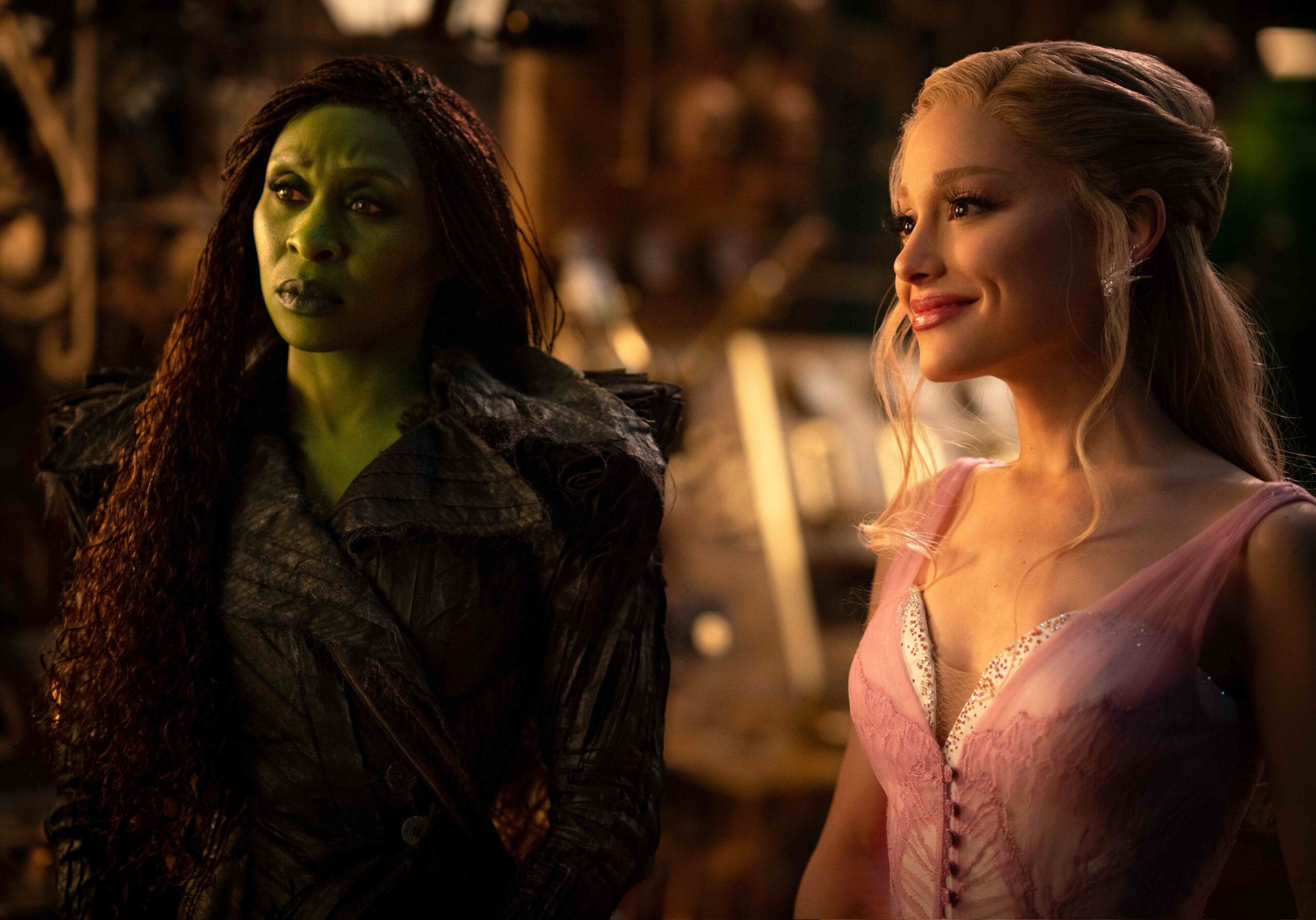
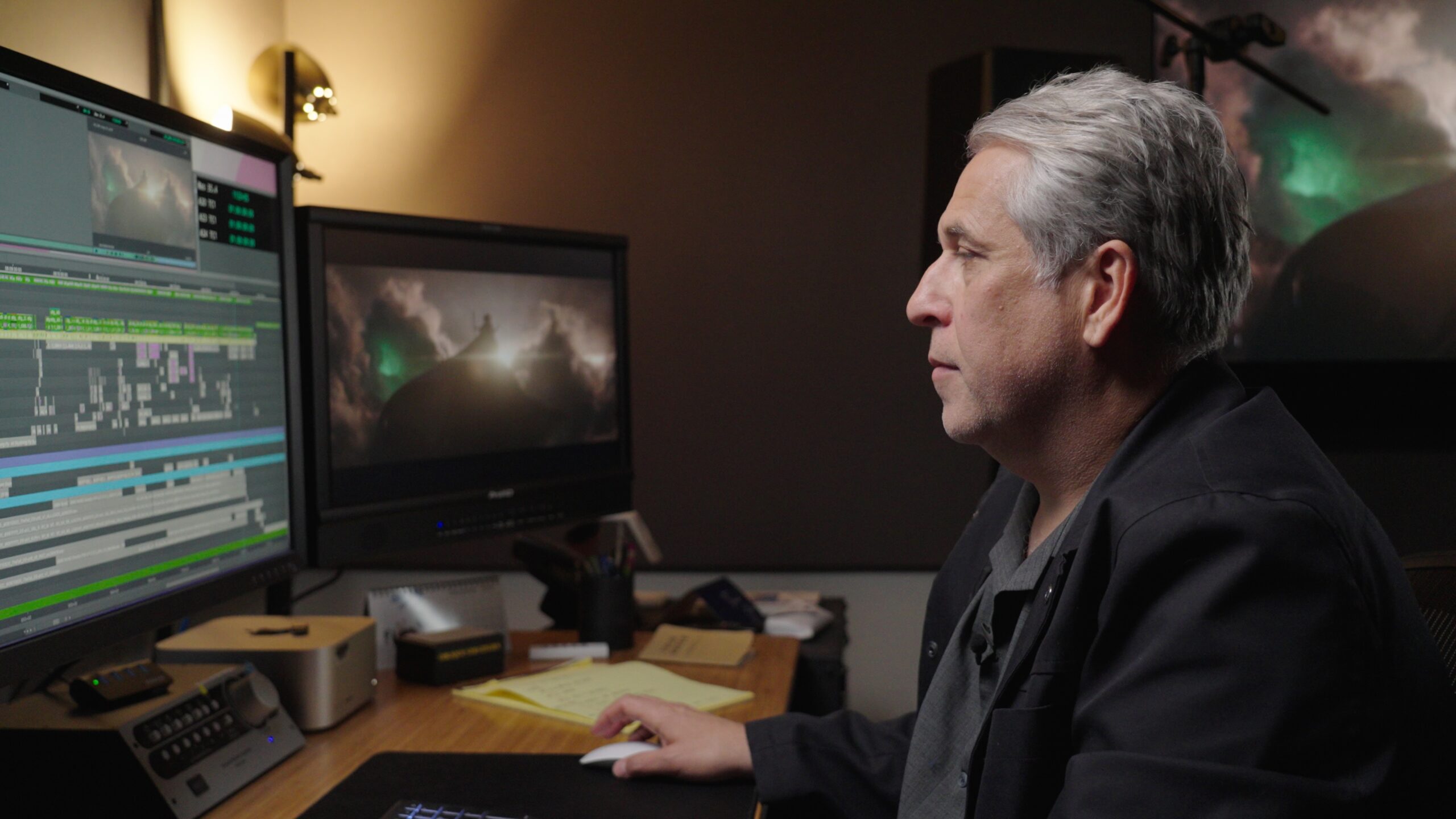
While having a phenomenal range of credits across genres, Kerstein definitely cemented his reputation as a music man of the editing room with Tick, tick…. Boom! and Wicked earning him two Academy Awards® nominations. He shared with us some of his secrets on tackling the tremendous task of finishing this epic journey and how finding intimate moments in grand scenes shapes his approach to work.
You have been Oscar® nominated for Tick, tick… Boom! and notable for Wicked last year. Are musicals like second nature, what do you love about working on them or what attracts you to them?
I love working on musicals because when a character does not have the ability to say how they feel, singing it is another form of expression. So oftentimes that singing is sort of a version of a monologue inside their heads, and I love to explore that form of expression. It’s unlike anything else in any other genre, like voiceover, because the musical is a very specific way in which characters can express themselves.
I also happen to really love music. So cutting musicals satisfies this love of mine of this specific form of expression, but also my love for music and the genre itself. The genre has such a long history. There’s so many incredible artists who have used this genre to express different stories from the Music Man or Grease or The Umbrellas of Cherbourg or All That Jazz. These are films that informed me as a kid, so I am really fortunate to be able to sort of dip my toe in that at all with In the Heights and Tick Tick Boom and then Wicked, and I have so much gratitude that I’ve been able to do it for a few years now.
How do you approach editing musicals vs more traditional narrative movies?
I don’t approach the scenes differently because the emotions don’t stop just because the music starts. My job as an editor is to hold the audience in dramatically regardless if the characters are speaking or singing.
When you start looking at a musical number, like a music video and start cutting it like one, it’s very easy to make it flashy or do these flourishes editorially and you end up losing the emotional connection to the audience. Instead, I need to understand how to move the plot forward and how to connect the audience emotionally. I can’t do that if I approach it and cut it differently just because the song starts.
So there’s this restraint that I try to use as I approach a musical number and I ask myself what is the story we’re trying to tell? How am I connecting to the actors emotionally and how can I then give that to the audience?
Editing both films has been a tremendous amount of work. What was the process like, the timeline? How did editing part two while part one was released affected your approach to the work?
We assembled both movies at the same time because we shot it like a TV series where part one is shot on one day and then part two could be literally the next day. So my approach was just to keep up with the camera and try to understand both of these movies as they were shooting them.
I want to give a shout out to Tatiana Riegel, who helped me with the assembly of part two while I was also working on the assembly of part one. It was really important for Jon to see both of these movies as quickly as possible after we had wrapped shooting, so within six weeks, we were watching both movies back to back. By doing so we could really get an in-depth understanding of the full arc of both stories together. Then we put part two to sleep for a year as we continued to work on part one.
We did for a couple of reasons. Each one of the movies took so much work, that we didn’t have resources to work on both parts. We also felt that we really had to get right the origin story that we get in part one, and, to see what the audience loved about these characters.
Once we had finished part one, we came back and opened up part two. After watching both again, we started to understand different needs for part two based on what our experiences of part one were.
The trick is part one had a lot of elements that we didn’t have in part two. Part one was an origin story and because of that it had a lot of joyfulness and a whimsical nature to it. The second film was much more of a melodrama. So there were things about part one that we couldn’t really utilize in part two.
But what we did find is that if we could connect the audience emotionally to these characters, we can carry them through a second movie that ultimately feels more like a tragedy.
We heard that you made quite a bit of changes to the scene order for the second film, how did you approach making those changes?
I made those changes through a lot of experimentation. We tried dozens of versions of the first act where for example, we had the Boq and Nessa scenes more towards the front. We felt like we had to lean into Glinda and Elphaba. And that we had to establish the tone quickly about the dystopic nature of where Oz was years later after we left Elphaba. So the approach was not being afraid to try new things and trying them on an audience. With the new and the old songs, we were even exploring ideas like whether or not these songs should exist. So we were constantly trying things in and out.
Another example was appropriating flashbacks. There was a version where we actually began the opening of For Good with a reprise of Elphaba jumping off of the tower and then flying out into the distance. What we found is that even though it was really satisfying, this idea of hearing Defying Gravity again, created the feeling of not starting the film confidently.
With that being said, those experiments led us to some fun discoveries and using flashbacks in other ways. For example, using the friendship montage that we had cut out of the first movie and placing it as a short little flashback of Elphaba in her nest.
There was just a lot of experimentation with things in and out of the movie and having the confidence to fail, because so much about editing is not being afraid to fail. Then showing it to your friends or your crew, and then ultimately an audience and seeing if it works. Once you can start to feel the audience is leaning in and that there’s some real emotion there, you know you got it right.
Both films have incredible scope. How do you manage keeping the focus on the magnetic performances and the audience not getting distracted?
It’s really difficult not to lean into the epic nature of building Oz and having flying monkeys and talking goats, and bears and what have you. When you’re working with incredible teams like ILM and Framestore, you can do anything – they can literally build tornadoes coming across the munchkinland and they can do that again and again if you ask them.
The trick about both of these movies is, and something that we would often say to ourselves, was just because we can do it doesn’t necessarily mean we should. So there’s a level of restraint that we used. For example, we don’t always need a wide shot or we don’t always need to fly over Oz, but instead we can lean into the intimacy. After all it’s about two characters and their friendship and how much they love each other, so we don’t want to get distracted or lean towards the shiny object that might look really cool but doesn’t have any sort of emotional weight to it. No pun intended, it was a dance between doing things that would be really cool with ILM but also leaning into the intimacy and I think that if we had ever had a question about what direction we should go, we always would lean into what made us feel something.
You collaborated with Jon on other movies in the past, including Crazy Rich Asians, what has the collaboration been like?
The collaboration with Jon means everything to me, he’s like a brother, a cinematic soulmate. When I met Jon back on Crazy Rich Asians, I knew that I was going to be able to raise his bar and he was going to raise mine and we were going to grow together as artists.
What I love so much about working with Jon is that he gives me a voice as an editor to express myself through my medium and the feeling that I am a co-parent in bringing this baby or these babies to life. He looks to me to help solve the problems and isn’t a director that dictates things. Instead he often says that he’s collecting the spices and I get to make a meal with him. So I love the fact that the edit is alive and that we are exploring it together and we’re finding the film together while constantly challenging each other.
Making movies is really hard, and it’s not always an easy collaboration. There’s fights and arguments about it but we’re not afraid to push the storytelling and we trust each other. We’ve built this trust and love for each other that we just want to make the best piece of artwork as possible and that we would deliver something to the audience that is grand and beautiful and gives them a reason to go back to the theatres.