


Editor’s note: This Emmy Season Preview sets the stage for SHOOT’s 16-part weekly The Road To Emmy Series of feature stories which starts next Friday (5/15). This week we shed light on the Netflix feature film Remarkably Bright Creatures, with insights from its director and co-writer, Olivia Newman.
Director Olivia Newman’s filmography reflects an affinity for stories centered on characters facing adversity–at times, even profound isolation–yet they ultimately find strength through connection with other people. This became evident right out of the gate with Newman’s feature directorial debut, First Match–which she also wrote. The film, which won the Audience Award at SXSW in 2018 and was released on Netflix–introduced us to Monique (portrayed by Elvire Emanuelle), a teenage girl whose life consists of bouncing from one foster home to another. Desperate for family. Monique decides that joining a high school boys’ wrestling team is the way back to her estranged father. Monique ultimately ends up gaining a sense of belonging but not in the way she had originally envisioned. She makes a human connection and finds a strength from within.
Newman went on to direct the 2022 Sony Pictures’ release Where the Crawdads Sing, based on Delia Owens’ best-selling novel, adapted for the big screen by Lucy Alibar, the Oscar-nominated writer of Beasts of the Southern Wild. Where the Crawdads Sing starred Daisy Edgar-Jones as Kya, a girl abandoned by her family, left to raise herself in the marshes of North Carolina. We follow Kya from her childhood in the 1950s through to adulthood. Grappling with abandonment and isolation, she forms a deep connection to the land and its beauty. A love of nature proves to be her saving grace. Still, she longs for human connection and winds up bonding with a young suitor named Tate (portrayed by Taylor John Smith) from whom she learns about romance and how to read–only to be abandoned by him as well. Another suitor, Chase (Harris Dickinson) emerges but is found dead in the wilderness. She’s charged with his murder, is jailed and put on trial–further intensifying the alienation and isolation she feels from a community that has always misjudged and dismissed her. Throughout her ordeal, Kya perseveres and manages to find her own path and a life with purpose.
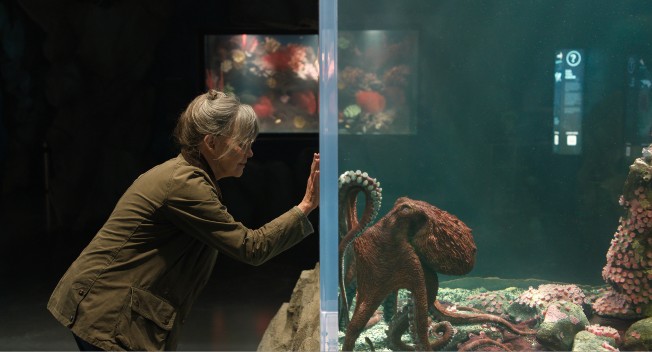
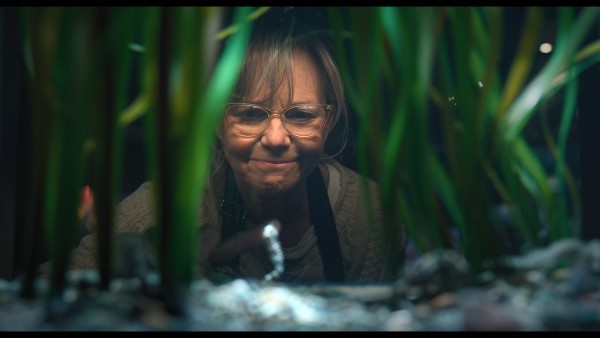
Fast forward to today, literally–May 8–and director-writer-executive producer Newman’s new feature, Remarkably Bright Creatures, premieres on Netflix and in select theaters. Newman teamed with John Whittington to pen this big screen adaptation of Shelby Van Pelt’s novel of the same title, which had a lengthy run on The New York Times Best Sellers list. The movie stars Sally Field as Tova, an elderly widow who works at a local aquarium where she forms a quirky yet heartfelt bond with an aging octopus, Marcellus. For brief intervals, Marcellus manages to successfully escape from his glass tank seemingly in search of something–akin to Tova who too is seeking some solace from the heart-wrenching death of her son years ago.
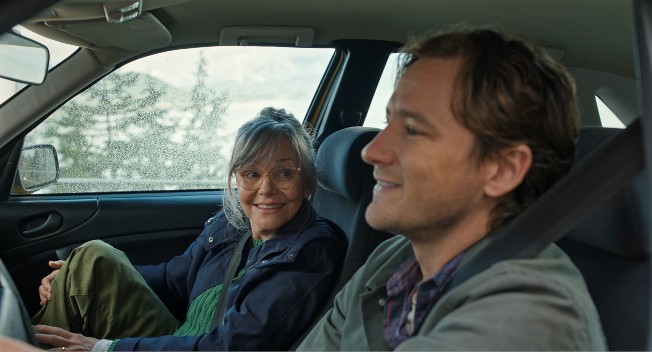
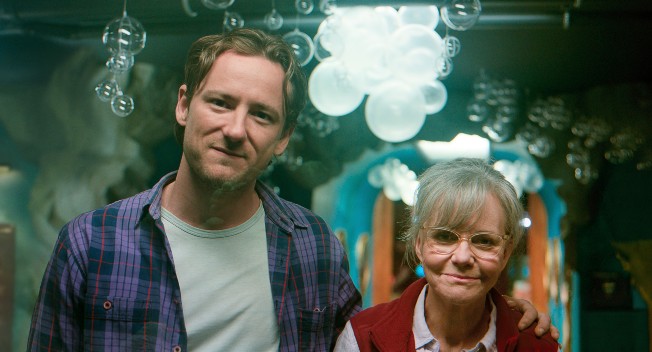
Tova also makes a human connection in this story–meeting by chance a wayward young man, Cameron (Lewis Pullman), who comes to town in search of family. Together, Tova, Cameron and Marcellus uncover a mystery that will lead them to a healing, life-changing discovery that restores their sense of wonder, fulfillment and purpose in life.
Remarkably Bright Creatures is very much aligned with Newman’s penchant for stories carrying themes of struggle, loneliness, longing and the power of connection with others. But this time around, Newman related to the moving, dramatic tale of recovery from trauma and tragedy–deftly underscored with lightheartedness and humor–on an even deeper level, her own recent life experience.
Newman embarked on her first feature screenplay adaptation as a writer at a time of personal and familial loss. In fact back when she first read the novel, Newman was looking into how to best care for her ailing mother-in-law, exploring assisted-living homes. Her mother-in-law’s condition worsened after a fall that made her bedridden and in need of more help. “I watched my husband navigate all of that. It was painful for her–and for him,” Newman recalled who shared that her mother-in-law died before she could be moved into an elder care home.
Not too long after that, Newman experienced the passing of her sister-in-law who had been battling cancer for some time. And finally a couple of months later, Newman had her family home destroyed by Southern California’s Eaton Fire.
Newman noted that her storytelling as it related to Remarkably Bright Creatures was deeply impacted by “watching my children experience grief and loss for the first time, my husband becoming an orphan” Just five days after her home was gutted by fire, Newman started prepping the movie for which the script was written. “To lose your family home and everything you ever owned is an experience like no other,” she said. “But what it helped me understand on a deeper level about the story was just what home means–losing those objects you’ve lived with and surrounded yourself with for decades, the kind of value they carry.” In Remarkably Bright Creatures, Tova is preparing to leave her home for a senior community.
Newman noted that the belongings that are most sorely missed are those not so much of monetary value but rather items that “carry deep memories and personal connection to people I’ve lost or are still in my life.” For Newman, among such objects of affection were her grandma’s napkin rings. They were a gift from Newman’s mom when she was on Peace Corps duty abroad. Different animals were carved into each napkin ring and Newman remembered playing with them as a child. Having them destroyed in the Eaton fire stung emotionally, a loss that brought Newman to tears. “It gave me a better understanding of Tova and my mother-in-law’s resistance to letting go of a place so filled with memories–and objects with such history. You’re surrounded by ghosts–and the feeling of people you have loved and who have become part of your home.”
As a filmmaker and storyteller whose work has evoked empathy from audiences over the years, Newman found herself more empathetic than ever with “a deeper and more personal emotional connection” to the trauma and tragedy experienced by the protagonists in Remarkably Bright Creatures. She added that other crew members were also going through incredibly trying life experiences during the making of the film–noting that one had lost a parent while another had suffered a pregnancy loss. Newman found it life-affirming that together cast and crew tapped into the human resilience and ultimately the joy of the Remarkably Bright Creatures story.
Conveying that resiliency, humor, joy and full emotional range of the protagonists were Field and Pullman. Field, who also served as a producer, was attached to the project before Newman came on board. Newman regarded having Field heading the cast as a blessing. Several talented actors did camera auditions for the role of Cameron. But when Pullman “walked into the room to read with Sally,” Newman said you could feel the chemistry as being “so natural” between them. “They fell into this wonderful banter,” said Newman who described the dynamic between them as feeling akin to “a nagging mom and annoying son” coming together, exuding all at once the tension, humor and lighthearted nature of their relationship. “Lewis is just such a brilliant actor, so able to dig deep and go to vulnerable places” while retaining “incredible comedic teaming.” Newman described Field as “a legend,” noting that watching her every day on set was like “a master class. Her comedic timing is just unreal. And Lewis was able to keep up with her. There was a lot of improv that would happen in scenes.”
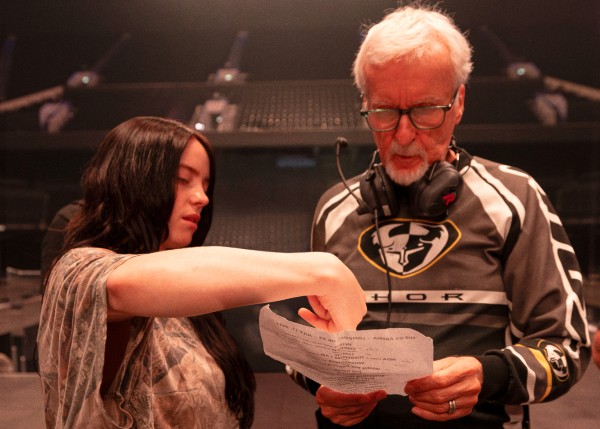
Newman also found it gratifying to reunite with cinematographer Ashley Connor whom she had worked with on First Match. “She and I have been trying to work together ever since,” said Newman who explained that their schedules never quite aligned–until Remarkably Bright Creatures. Newman noted that the aforementioned improv was embraced by Connor, whose priority is to tell the story in the best way, connecting to what is happening in every scene emotionally. While the DP has a detailed shot list, she is open to possibilities as they emerge if and when the actors, said Newman, ”come up with something different,” Connor, continued Newman, is all in if it advances the characters and story. “She never says ‘no.’ Anything is possible.”
SHOOT’s weekly 16-part The Road To Emmy Series of feature stories gets underway on May 15. Nominations will be announced and covered on July 8. Coverage of the Creative Arts Emmy winners will appear on September 5 and 6, and we will report on winners at the primetime Emmy Awards ceremony on September 14.